Estonia is a country in the Baltic region of Northern Europe. It is a developed country with an advanced, high-income economy and part of the European Union and in 2011 was ranked among the fastest-growing in the EU. As a part of the Union, the country accepts the Euro. Even not so well known the country is pretty tech-savvy. Some of the most known companies started in this country are Skype, Hotmail, Transferwise, Veriff and others.
The best time to visit this Baltic country is late spring or summer when the weather is good enough to allow you to explore the cities by combining some great outdoors. Traveling to Estonia is perfect for all types of outdoor lovers.
Summers are short – from around mid-June to late August, but even then you can experience showers and chilly nights. It is recommended to pack a waterproof jacket and warm sweater alongside your T-shirts.
The first snowfalls usually can be expected around mid-November.
The reasons to visit Estonia are countless. But before you book your trip to Estonia, here a few things you may want to know:
Currency
The euro is the official currency of Estonia, which is a member of the European Union. ATMs are available throughout the country and credit cards are widely accepted, but you can expect to pay with cash or pay with your phone, most of the time. Half of all point of sale transactions in Estonia were done with cash in 2016, according to the European Central Banks in comparison to the rest of the EU where on average, 75% of POS transactions were made with cash.
Technology in Estonia
Estonia is one of the top tech countries in Europe. You’ll have WiFi pretty much everywhere you go. Internet access is widely available throughout the country. Based on Estonian World Estonia is ranked 15th in world fastest internet speed. The electrical outlet is standard as the rest of Europe, so you can use your European adapter.
Language
The official language of Estonia is Estonian, a Uralic language which is related to Finnish. It is unrelated to the bordering Russian and Latvian languages, both of which are Indo-European.
Prices
Estonia is still a budget travel destination in Europe. The prices in Tallinn have increased in the past couple of years, but still affordable.
Safety
Estonia is pretty safe to travel to. Its crime rates are mostly low, but of course in bigger cities and the capital city of Tallinn, you have to be more cautious about areas to avoid pickpockets, or other types of assault.
Cuisine
The traditional cuisine of Estonia uses meat and potatoes varieties. There are a lot of soups, seafood, of course, meat. Estonian food is heavily influenced by its nearby neighbors. Many types of food are close to Russian. Kohuke is a great Estonian snack. It is a milk-curd sweet covered with chocolate.
The most typical foods in Estonia are black bread, pork, and potatoes. Estonians are proud of their beer and vodka.
Transportation
Estonia is a small country and it is, therefore, very easy to get around. The majority of the travel throughout the country is by bus. However, some of the islands require a car in order to fully explore them.
Reccomendations: Travel Insurance – Don’t forget about getting travel insurance when you are traveling since it covers not only the costs of medical problems but also theft and loss of valuables.
Visas – Many countries do not need a visa in order to enter Estonia, for any stays shorter than 90 days. If it is longer than that, you might need to acquire a visa. Make sure your passport is valid for at least six months from the date you plan on return. You can always check your visa status, visit www.doyouneedvisa.com
If you have your own tips on what not do, when you visit Estonia, please share them in the comment below. I would love to hear about your experience.
Want to learn more about sustainable travel? Check our other posts.
The Azores, an autonomous region of Portugal, are an archipelago in the mid-Atlantic. The islands are characterized by dramatic landscapes, fishing villages, green pastures and hedgerows of blue hydrangeas.
The Azores islands are consistently ranked as one of the best, most sustainable, and most affordable island travel destinations in Europe. Located between Europe and North America, the Azores are the perfect island getaway for those looking for a unique and beautiful destination.
There is plenty to see and do (and eat) throughout the nine islands to keep the most ambitious traveler busy and beyond satisfied; here’s just a starter.
Lets explore the top 10 things to do in the Azores:
Photo Credit: Sete Cidades, Azores, Portugal | ARoxo/Moment/Getty Images
Azores Geopark
The Azores Geopark is a network of 121 geographically-dispersed sites of geographic heritage and marine areas that covers the nine volcanic islands of the archipelago of the Azores, representating the archipelago’s vast and varied volcanic geodiversity. There’s no place quite as geologically interesting and breathtaking as the Azores Geopark.
The natural beauty in the park includes about 300 volcanic cavities, underwater geothermal sources, fumarolic fields, crater lakes, dry calderas and so much more.
If you’ve ever dreamed of discovering the world of wild dolphins and whale, then look no further. Many species of whale and dolphin pass by the Azores on their annual migrations. The Azores attracts huge numbers of dolphins and whale, many of whom are very interactive both with boats and swimmers. Whale are, undeniably, one of Mother Nature’s most beautiful and majestic creatures, so it’s only natural to want to see these marvelous animals up close and personal.
This is of the most unforgettable experiences for the whole family includes sailing through the Atlantic in search of these majestic marine mammals. Most of the islands have guided tours available. The largest of the nine islands, Sao Miguel — some of the biggest highlights lie in the vast ocean that surrounds it. And probably the easiest way there with companies in Ponta Delgada and Vila Franca do Campo.
April through June is the best time to see blue whales, but you can still see other kinds of whales and dolphins the rest of the year-round.
The waters that surround the Azores are a diver’s paradise, filled with all sorts of fish species and amazing rock formations, but diving isn’t a year-round pursuit. Each island brings something different to the table: For diving enthusiasts, the very best can be found in the waters of Terceira, near the old port of Angra do Heroísmo in Terceira there’s an underwater anchor graveyard of ancient ship anchors and marine life like eagle rays and octopus, while the awesome topography of Pico Island continues beneath the waves with sheer volcanic cliffs.
Off São Miguel there are volcanic canyons at low depth, providing habitat for octopuses and triggerfish.
Throughout the islands, there are more than 100 diving spots with over 3,000 marine species, vertical walls, clean waters and incredible encounters with manta rays, mobulas and even whale sharks.
You can dive the Azores any time of the year, but the best offshore dive sites are only really accessible during the summer.
There’s a lagoon in the middle fed by the ocean on the landward side, and so completely shielded from the ocean currents. This strange, beautiful spot fills up quickly on sunny days. You can take a short boat ride from the Pier of Vila Franca do Campo to get to this amazing location
Enjoy a once-in-a-lifetime experience at the Islet of Vila Franca do Campo. You can enjoy an afternoon on the slopes of the ancient caldera or go for a swim within the Islet’s crater. This tiny island is just a kilometer away from São Miguel’s coast. Spot beautiful and vibrant vegetation, a gorgeous lagoon shielded from the ocean’s currents, and marvel at the natural cone that the islet creates.
Photo Credit: Wikimedia Commons
Sete Cidades Caldera
This landscape has been shaped by successive volcanic events over the last 38,000 years. The last eruption might have been as recent as the 1400s, just before the island was colonized.
Nothing can prepare you for the astonishing views of the Sete Cidades Massif on the west side of São Miguel Island. Twin green and blue lakes are ensconced in evergreen vegetation and shielded by a massive volcanic crater that rises like ramparts is one of the scenic highlights of the Azores. Sitting inside the crater of an extinct volcano, a bridge divides the lake into two sections. They each have quite distinct colors. Visit on a clear day if possible, as that’s when you’ll get those perfect breathtaking views.
The natural beauty of this twin lake is breathtaking with lively hues of green blanketing the surrounding landscapes. The twin lakes, which are relatively small and are ecologically unique, are connected by a small square and can be crossed via a small bridge. They are known simply as the Green Lake and the Blue Lake
Boca do Inferno translates as the Mouth of Hell, is likely to be one of the most beautiful places you’ve ever visited. With just a few minutes walk, you’ll see a breathtaking panorama that you can’t imagine.
You can see the small town of Sete Cidades visible in the distance, and it’s one of the best places on Sao Miguel to see how volcanic activity has shaped the island.
If you are driving, don’t park in the car park off the main road, but continue driving on the dirt road opposite for a few minutes until you reach the end. The dirt road runs along the top of the caldera, and you walk walk directly alongside where you park the car.
Photo Credit: Tiago Ferreira / Flickr
Terra Nostra Park
A visit to the Terra Nostra Gardens is like spending time in a secret paradise tucked away at the Azores, one of the world’s best-kept secrets. Over 200 years old, the Terra Nostra Gardens are internationally renowned for their incredible beauty which is showcased in a sprawling 31-acre complex. Visitors to the gardens can see beautiful plant life from all over the world such as Rhododendrons from Malaysia, a collection of Cycads and Camellias, the exceptional Victoria Cruziana, and even over 300 kinds of ferns. Full of tropical and subtropical plants from the Azores and around the world, it’s easy to spend an hour or more exploring these large, impressive gardens.
Terra Nostra Park The Botanical Park´s next highlight is the famous thermal water pool. The volcanic hot spring nourishes the pool with temperatures between 35 and 40 degrees Celsius.
Photo Credit: madeinazores.eu
Pico Island Wine Country
With all of the volcanos surrounding the Azorean islands, the Pico Island Wine Country has been producing world-class wine since the 15th century. The stone homes and stone-walled vineyards that were built to protect the 2,439 acres of vineyard from fierce Atlantic winds and surges of salty ocean water from centuries ago can still be seen today in the UNESCO World Heritage-listed Criação Velha wine region, in the municipality of Madalena.
Tour the vineyards with a local guide during the day and spend the late afternoons and evenings sipping and tasting all of the gorgeous wines that Pico Island has to offer.
Photo Credit: wikipedia
Montanha do Pico
At Pico Island you can climb the mountain, 2351 meters (7713 feet) above sea level. The Montanha do Pico is one of the highest Atlantic mountains, it’s the tallest in Portugal and twice the elevation of any other peak in the Azores. The Montanha do Pico is classified as a basaltic stratovolcano and was declared a nature reserve in 1982 because of its spectacular beauty and wildlife. With a summit that often disappears into the cloud.
You can climb the mountain in the afternoon so you can see the sunset when you are in the top or enjoy a remarkable view of the Faial, Graciosa, São Jorge and Terceria Islands. The steep, nearly 3-mile trek takes about three hours. In addition to magnificent vistas, you’ll see lava tubes and fascinating rock formations too.
The Montanha do Pico is classified as a basaltic stratovolcano and was declared a nature reserve in 1982 because of its spectacular beauty and wildlife.
Photo Credit: azoresontravel.com
Poca da Dona Beija
Take a break from your tour of Sao Miguel with a relaxing swim at Poca Da Dona Beija, a small spa featuring three natural pools of iron-rich water known for its therapeutic properties. Fed by a series of hot springs, the small pools remain at about 39 C (102 F), an ideal temperature for soothing tense muscles and easing pains associated with chronic rheumatism.
Today, Poca da Dona Beija has been lovingly renovated and update to exude a rustic charm with its brick pools that are fringed by vibrant tropical vegetation. After the hot bath, you can enjoy the tropical landscaping and the gift shop of the facility. Keep in mind that the yellowish water can leave stains on your clothes.
Photo Credit: Jorge Santos / olhares.sapo.pt
Lagoa das Furnas
There are three spectacular lakes on São Miguel Island and one of them is the Lagoa das Furnas. Lagoa das Furnas is unique in scenery and experiences. One of the most unique features of Lagoa das Furnas is the clear and amazing sign of volcanic activity that takes place on the lake’s northwestern shore. Furnas is the place to visit if you want to see the hot springs. It has an active caldera with steam vents, mud pots and geysers, locals cook food in earth ovens available in picnic areas. This hot spring and most touristy city of the island is situated in the east inland of Sao Miguel in the middle of mountains and forest.
On a raised boardwalk guests can navigate to get a great view of the small calderas and pools at the lake spouting steam.
These small craters are even used by restaurant chefs in the town of Furnas who bring their pots of cozido (meat and vegetable stew) and let them simmer in the hot ground. And after that you may be enticed to head to town to taste traditional food cooked with volcanic activity.
Check this official video about Azores from VisitPortugal. Don’t forget to check their Youtube channel for more and unforgettable videos about Portugal.
Iceland consists of an unforgiving landscape void of trees, whipped by wind and dotted with gushing geysers and bubbling hot springs.
Only 2% of the population is unemployed, the country has no army, they are pioneers in the use of geothermal energy for space heating. The nation has some of the globe’s lowest crime and highest life expectancy rates, and a long history of being named one of the happiest countries on the annual “World Happiness Report.”
Iceland is the Safest and Most Peaceful Country in the World
Are you thinking about going to Iceland? Here are some things about Iceland that you may have heard.
Iceland is one of only two parts of the planet where the mosquitoes never set up, the other is being Antarctica. In places like New Caledonia, Seychelles and French Polynesia mosquitos exist, but the insects cannot carry the virus as it requires the blood of land-based mammals, which are absent in these places.
Photo credit: Tony Calvert / Flickr
The Northern Lights
The Aurora Borealis is one of the main reasons travelers from all around the world venture themselves in the dark and cold nights of Iceland. But the reward of facing the extreme temperatures and strong winds is the possibility to appr
You can watch this natural spectacle on the outskirts of Reykjavík, but towards the north the lights can get more intense. the country becomes the best spot to view the full wonder of the Northern Lights. They are usually seen on the Jokulsarlon lagoon located in South Iceland. They are largely seen over the period from September to April.
Photo credit: Fabrice TRINITE / Flickr
The Blue Lagoon
This is the most famous attraction in Iceland. There are several hot pools in Iceland and its use of geothermal power, but this one is the total winner. The water is geothermal heated and it is warm all year round and definitely needs to be in your checklist.
The ancient glaciers of Iceland cover more than 10% of the country and include the largest glacier in Europe, Vatnajökull. The Jökulsárlón glacier lagoon is one of the best sights in Iceland, where you see a chaotic ensemble of glacier chunks slowly floating their way out to sea. Photo credit: Andri Elfarsson / Flickr
Volcanoes
There are about 130 volcanic mountains, some active and some extinct. You can take an Icelandic super jeep or helicopter and tour the volcanic landscape of Iceland. A trip to see these landscapes is a trip into natural art. One of the highlights is Thrihnukagigur volcano – the last eruption occurred thousands of years ago. This is usually a journey 128 meters deep and allows you to explore the volcano inside of the cavern is stained with russet red scars and flashes of blackened indigo. You can check the tour prices operated by Inside the Volcano.
You can dive between continents
In Iceland and you will witness the North American and the Eurasian tectonic plates living together in perfect harmony. You can dive between the North American and Eurasian continental tectonic plates! Photo credit: Guitar photographer / shutterstock
Waterfalls
The iconic Gullfoss waterfall is famed for its scale and beauty. The water stream is fed by the Langjökull glacier, second largest glacier in Iceland, and the power of water is breathtaking. Another of the major ones and a prominent tourist attraction is the Svartifoss waterfall. Make sure you also visit their tallest waterfalls, Glymur, and Europe’s most powerful waterfall, Dettifoss. Photo credit: Giuseppe Milo / Flickr
Ice Caves
Iceland’s ice caves are among the most extraordinary and mesmerizing wonders of nature and can certainly be counted among the most breath-taking sights the world has to offer. Ice caves are natural phenomena that are formed in glaciers during winter. Most often they are formed by water running through or under the glacier and new caves are formed every year. Every cave is different and you never really know what you’ll get to see before you go in. There are knowledgeable guides that will take you on this epic journey under the blue ice.
Þingvellir National Park
Þingvellir (Thingvellir) National Park is a UNESCO Heritage site and it’s very important to the locals because of its historical and cultural background. The park sits in a rift valley caused by the separation of 2 tectonic plates, with rocky cliffs and fissures like the huge Almannagjá fault. Thingvellir is a favourite stop among travellers along the Golden Circle route. t is the visible site of the mid-Atlantic Ridge where the North American and Eurasian tectonic plates meet.
Everybody is Equal
Based on Global Gender Gap Report, Iceland tops the list for being the country with the most gender equality in the world for the seventh straight year in a row. Iceland is often referred to as the most feminist place in the world.
Everyone Speaks English
If you are worried about travelling to a foreign country and not being able to speak to anyone, don’t you worry! In Iceland, almost everybody speaks English. All children are required to learn both English and Danish in elementary schools.
Experience Iceland’s Unique Cuisine
Iceland is known for its unique cuisine. In Iceland you can go to a restaurant and get amazingly fresh seafood that was caught earlier that day. Icelandic ingredients are known for being fresh, healthy and sustainable. Seafood and lamb stand out as mouthwatering entree items on many menus. They also have options that will cater to specialized diets. Here are suggestions for vegan restaurants in Reykjavik. Photo credit: imgur.com
Iceland’s Capital City
Reykjavik is Amazing. But Iceland’s capital city of Reykjavik is a place that will lure you in with Viking-age history, world-class museums, a geothermal beach, inviting pubs and plenty of adventures for the entire family to enjoy. Reykjavik is also a great place for some live music and entertainment. The whole city of Reykjavík is made up of colourful houses, not just in one area, but all over the place!
Iceland is one of the Happiest Countries in the World
According the World Happiness Report, Iceland ranks third in the world for happiness. If you travel to Iceland, you will surely find some happy and friendly locals to talk to. The local Icelandic swimming pools are a great place to meet new people where you can have fun and interesting conversations with the locals.
Adventure Trails
Iceland is the perfect destination for adventure-loving travelers. The Laugavegur Hiking Trail is Iceland’s most famous hiking trail and truly one of the world’s most beautiful treks. The trail connects the Landmannalaugar and Þórsmörk Nature Reserves and offers a variety of different landscapes along the way. Every day has different views with beautiful scenery of pristine nature with volcanic mountains, lava fields, glaciers, natural hot springs, black arctic deserts and lush forrested valleys.
When to travel to Iceland?
The pick season in Iceland is during summertime [May to September], with mild temperatures and fully booked hotels. During that time, the days are longer and you can enjoy beautiful moments in nature and outside. Iceland is a small country, to get around you can rent car and go explore it by yourself. Or you can book a tour and visit the waterfalls, geysers, volcanoes and glaciers. This country has some of the most spectacular sights in the world, with active volcanoes, breathtaking mountain scenery and calming geothermal springs.


 Photo credit: Tony Calvert / Flickr
 Photo credit: Fabrice TRINITE / Flickr
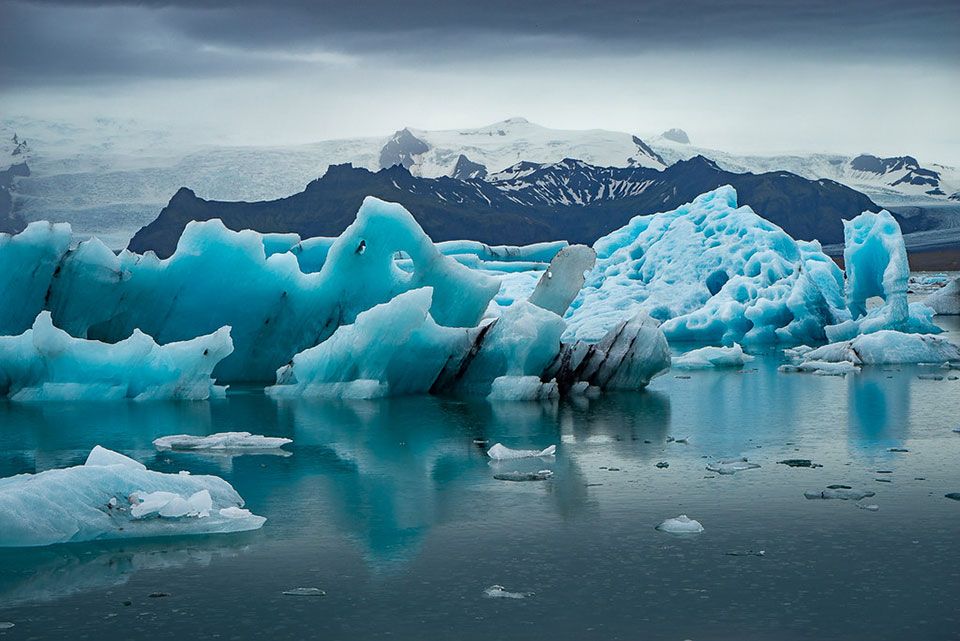 Photo credit: N Blom / Flickr
 Photo credit: Andri Elfarsson / Flickr
 Photo credit: Guitar photographer / shutterstock
 Photo credit: Giuseppe Milo / Flickr
 Photo credit: imgur.com
