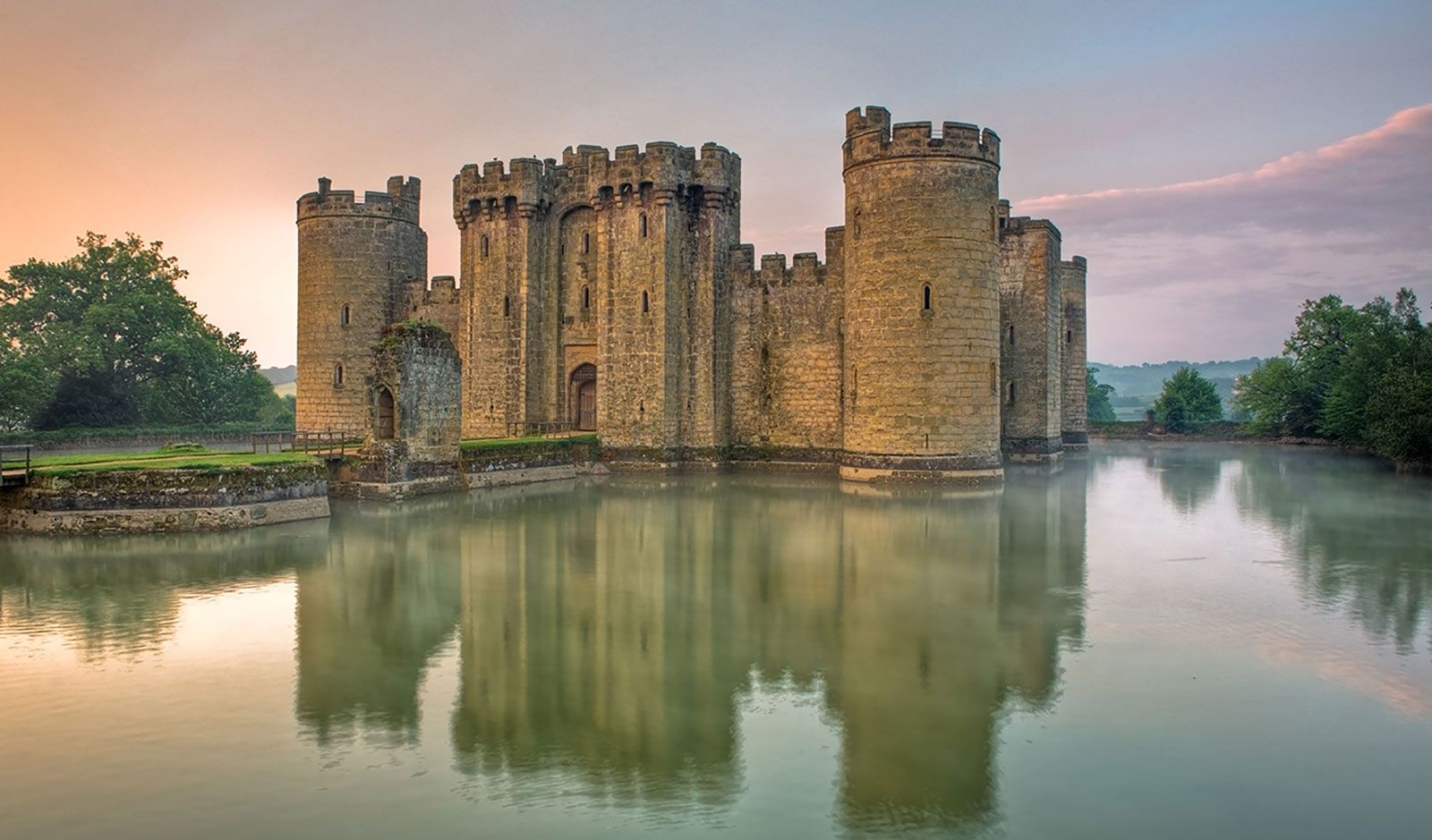
Estonia isn’t so popular travel destination, compare to its neighbors like Sweden and Finland, but this small Baltic country has plenty to offer. This Northern Europe country borders the Baltic Sea and the Gulf of Finland. The more than 1,500 islands, lakes, old forests, and rocky beaches offer to its visitors a unique chance to experience a dynamic little country. Formerly part of the Soviet Union, it’s dotted with castles, churches and hilltop fortresses. Estonia has been rated by Lonely Planet as The best value destination in the world in 2016.
What Not to Do in Estonia
If you are planning to travel to this Baltic country, the following guide will help you to have a more pleasant experience. Here I’ll share a few things you need to know not to do if you travel to Estonia.
1. Avoid Speaking About USSR
It’s preferred not to speak about their history with the Soviet Union or USSR because of their bad memories about the time being part of it. Estonians are not very comfortable with being referred to as Eastern-Europeans.
2. Keep Your Voice Down
Do not raise your voice in a conversation. It is not nice.
3. You Can Get Harassed
Don’t be surprised if you get harassed. People traveling to Estonia have been warning that they may be a target of harassment. People who look or appear to be from a foreign country have been known to be targeted to be harassed for racial reasons.
4. Don’t Keep Your Shoes On
When you are entering a home in Estonian, don’t forget to take off your shoes when you step inside.
5. Don’t Expect a Salesman to Approach You in The Stores
One of the major social rights in Estonia is your freedom to choose and decide on your own. And because of that when you go in the stores, most of the time you have to ask what you are looking for and not to expect that the salesman will start a conversation with you or try to sell you something as in some other countries.
6. Don’t Ask Them if They Speak Russian
The absolutely worst thing is to ask Estonians that is Russian your language or speak Russian to them. Estonians are proud of their own language – Estonian.
However, most Estonians prefer to speak English.
7. Bicycling Is Not so Popular
Bicycles are not so used in Tallinn. There aren’t many roads for bicycles except in Pirita, you have to be careful if you are biking!
8. Don’t Forget to Wear Reflectors
If you decide to rent a bike and go for a ride after dark, don’t forget to wear small reflectors, especially during winter. The fine can range from $50 to $500 USD.
9. Don’t Drink Alcohol Outside
It is not allowed to drink alcohol outside, only at the bar area or at home. The age limit for alcohol and smoking is 18 years old. Usually, the rule, when shops can sell alcohol is from 9.00 to 22.00.
10. Don’t Expect Help When Traveling With Kids
If you are traveling on the streets and in public transport with children in pushchairs. The streets of old cities are cobbled making it difficult to push strollers or the public transportation stroller, buses have high stairs and this may make it difficult for you and don’t expect that people will help you.
The Azores, an autonomous region of Portugal, are an archipelago in the mid-Atlantic. The islands are characterized by dramatic landscapes, fishing villages, green pastures and hedgerows of blue hydrangeas.
The Azores islands are consistently ranked as one of the best, most sustainable, and most affordable island travel destinations in Europe. Located between Europe and North America, the Azores are the perfect island getaway for those looking for a unique and beautiful destination.
There is plenty to see and do (and eat) throughout the nine islands to keep the most ambitious traveler busy and beyond satisfied; here’s just a starter.
Lets explore the top 10 things to do in the Azores:
Photo Credit: Sete Cidades, Azores, Portugal | ARoxo/Moment/Getty Images
Azores Geopark
The Azores Geopark is a network of 121 geographically-dispersed sites of geographic heritage and marine areas that covers the nine volcanic islands of the archipelago of the Azores, representating the archipelago’s vast and varied volcanic geodiversity. There’s no place quite as geologically interesting and breathtaking as the Azores Geopark.
The natural beauty in the park includes about 300 volcanic cavities, underwater geothermal sources, fumarolic fields, crater lakes, dry calderas and so much more.
If you’ve ever dreamed of discovering the world of wild dolphins and whale, then look no further. Many species of whale and dolphin pass by the Azores on their annual migrations. The Azores attracts huge numbers of dolphins and whale, many of whom are very interactive both with boats and swimmers. Whale are, undeniably, one of Mother Nature’s most beautiful and majestic creatures, so it’s only natural to want to see these marvelous animals up close and personal.
This is of the most unforgettable experiences for the whole family includes sailing through the Atlantic in search of these majestic marine mammals. Most of the islands have guided tours available. The largest of the nine islands, Sao Miguel — some of the biggest highlights lie in the vast ocean that surrounds it. And probably the easiest way there with companies in Ponta Delgada and Vila Franca do Campo.
April through June is the best time to see blue whales, but you can still see other kinds of whales and dolphins the rest of the year-round.
The waters that surround the Azores are a diver’s paradise, filled with all sorts of fish species and amazing rock formations, but diving isn’t a year-round pursuit. Each island brings something different to the table: For diving enthusiasts, the very best can be found in the waters of Terceira, near the old port of Angra do Heroísmo in Terceira there’s an underwater anchor graveyard of ancient ship anchors and marine life like eagle rays and octopus, while the awesome topography of Pico Island continues beneath the waves with sheer volcanic cliffs.
Off São Miguel there are volcanic canyons at low depth, providing habitat for octopuses and triggerfish.
Throughout the islands, there are more than 100 diving spots with over 3,000 marine species, vertical walls, clean waters and incredible encounters with manta rays, mobulas and even whale sharks.
You can dive the Azores any time of the year, but the best offshore dive sites are only really accessible during the summer.
There’s a lagoon in the middle fed by the ocean on the landward side, and so completely shielded from the ocean currents. This strange, beautiful spot fills up quickly on sunny days. You can take a short boat ride from the Pier of Vila Franca do Campo to get to this amazing location
Enjoy a once-in-a-lifetime experience at the Islet of Vila Franca do Campo. You can enjoy an afternoon on the slopes of the ancient caldera or go for a swim within the Islet’s crater. This tiny island is just a kilometer away from São Miguel’s coast. Spot beautiful and vibrant vegetation, a gorgeous lagoon shielded from the ocean’s currents, and marvel at the natural cone that the islet creates.
Photo Credit: Wikimedia Commons
Sete Cidades Caldera
This landscape has been shaped by successive volcanic events over the last 38,000 years. The last eruption might have been as recent as the 1400s, just before the island was colonized.
Nothing can prepare you for the astonishing views of the Sete Cidades Massif on the west side of São Miguel Island. Twin green and blue lakes are ensconced in evergreen vegetation and shielded by a massive volcanic crater that rises like ramparts is one of the scenic highlights of the Azores. Sitting inside the crater of an extinct volcano, a bridge divides the lake into two sections. They each have quite distinct colors. Visit on a clear day if possible, as that’s when you’ll get those perfect breathtaking views.
The natural beauty of this twin lake is breathtaking with lively hues of green blanketing the surrounding landscapes. The twin lakes, which are relatively small and are ecologically unique, are connected by a small square and can be crossed via a small bridge. They are known simply as the Green Lake and the Blue Lake
Boca do Inferno translates as the Mouth of Hell, is likely to be one of the most beautiful places you’ve ever visited. With just a few minutes walk, you’ll see a breathtaking panorama that you can’t imagine.
You can see the small town of Sete Cidades visible in the distance, and it’s one of the best places on Sao Miguel to see how volcanic activity has shaped the island.
If you are driving, don’t park in the car park off the main road, but continue driving on the dirt road opposite for a few minutes until you reach the end. The dirt road runs along the top of the caldera, and you walk walk directly alongside where you park the car.
Photo Credit: Tiago Ferreira / Flickr
Terra Nostra Park
A visit to the Terra Nostra Gardens is like spending time in a secret paradise tucked away at the Azores, one of the world’s best-kept secrets. Over 200 years old, the Terra Nostra Gardens are internationally renowned for their incredible beauty which is showcased in a sprawling 31-acre complex. Visitors to the gardens can see beautiful plant life from all over the world such as Rhododendrons from Malaysia, a collection of Cycads and Camellias, the exceptional Victoria Cruziana, and even over 300 kinds of ferns. Full of tropical and subtropical plants from the Azores and around the world, it’s easy to spend an hour or more exploring these large, impressive gardens.
Terra Nostra Park The Botanical Park´s next highlight is the famous thermal water pool. The volcanic hot spring nourishes the pool with temperatures between 35 and 40 degrees Celsius.
Photo Credit: madeinazores.eu
Pico Island Wine Country
With all of the volcanos surrounding the Azorean islands, the Pico Island Wine Country has been producing world-class wine since the 15th century. The stone homes and stone-walled vineyards that were built to protect the 2,439 acres of vineyard from fierce Atlantic winds and surges of salty ocean water from centuries ago can still be seen today in the UNESCO World Heritage-listed Criação Velha wine region, in the municipality of Madalena.
Tour the vineyards with a local guide during the day and spend the late afternoons and evenings sipping and tasting all of the gorgeous wines that Pico Island has to offer.
Photo Credit: wikipedia
Montanha do Pico
At Pico Island you can climb the mountain, 2351 meters (7713 feet) above sea level. The Montanha do Pico is one of the highest Atlantic mountains, it’s the tallest in Portugal and twice the elevation of any other peak in the Azores. The Montanha do Pico is classified as a basaltic stratovolcano and was declared a nature reserve in 1982 because of its spectacular beauty and wildlife. With a summit that often disappears into the cloud.
You can climb the mountain in the afternoon so you can see the sunset when you are in the top or enjoy a remarkable view of the Faial, Graciosa, São Jorge and Terceria Islands. The steep, nearly 3-mile trek takes about three hours. In addition to magnificent vistas, you’ll see lava tubes and fascinating rock formations too.
The Montanha do Pico is classified as a basaltic stratovolcano and was declared a nature reserve in 1982 because of its spectacular beauty and wildlife.
Photo Credit: azoresontravel.com
Poca da Dona Beija
Take a break from your tour of Sao Miguel with a relaxing swim at Poca Da Dona Beija, a small spa featuring three natural pools of iron-rich water known for its therapeutic properties. Fed by a series of hot springs, the small pools remain at about 39 C (102 F), an ideal temperature for soothing tense muscles and easing pains associated with chronic rheumatism.
Today, Poca da Dona Beija has been lovingly renovated and update to exude a rustic charm with its brick pools that are fringed by vibrant tropical vegetation. After the hot bath, you can enjoy the tropical landscaping and the gift shop of the facility. Keep in mind that the yellowish water can leave stains on your clothes.
Photo Credit: Jorge Santos / olhares.sapo.pt
Lagoa das Furnas
There are three spectacular lakes on São Miguel Island and one of them is the Lagoa das Furnas. Lagoa das Furnas is unique in scenery and experiences. One of the most unique features of Lagoa das Furnas is the clear and amazing sign of volcanic activity that takes place on the lake’s northwestern shore. Furnas is the place to visit if you want to see the hot springs. It has an active caldera with steam vents, mud pots and geysers, locals cook food in earth ovens available in picnic areas. This hot spring and most touristy city of the island is situated in the east inland of Sao Miguel in the middle of mountains and forest.
On a raised boardwalk guests can navigate to get a great view of the small calderas and pools at the lake spouting steam.
These small craters are even used by restaurant chefs in the town of Furnas who bring their pots of cozido (meat and vegetable stew) and let them simmer in the hot ground. And after that you may be enticed to head to town to taste traditional food cooked with volcanic activity.
Check this official video about Azores from VisitPortugal. Don’t forget to check their Youtube channel for more and unforgettable videos about Portugal.
Haarlem is a small city located just 27 minutes with a train outside of Amsterdam. Its abundance of historical sights, cultural attractions and hidden gems crammed into a relatively small city, a visit to Haarlem makes for a brilliant day trip from Amsterdam. There are many attractions to keep you busy – including river cruises, flower markets and more.
The square is located at the historic heart of Haarlem, underneath the imposing Grote Kerk, and is the image of the city that many people will recognize. Hosting regular festivals, concerts and markets, the Grote Markt is the hub of daily life in Haarlem.
The Grote Kerk or St.-Bavokerk is a Reformed Protestant church and former Catholic cathedral located on the central market square in the Dutch city of Haarlem. This Late Gothic cruciform basilica, now reaching 140 meters in length with its slender 40-meter tower, was started in the 14th century. The cathedral’s famous Müller Organ is considered one of the greatest such instruments in the world for its tone and decoration.
The beautiful giant towers high above Haarlem’s rooftops and the gothic interior is nothing but breathtaking.
The Frans Hals Museum is one of the leading art galleries in the Netherlands. The museum has the world’s largest collection of works by Hals, including five of his large civic guard pieces.
It was founded in 1862 in the newly renovated former Dominican church cloisters located in the back of the Haarlem city hall.
The museum is specialized in restoration and research on the works of Haarlem painters in the 17th century and of the painters of the 16th century who taught them to paint, most notably Jan van Scorel, Maerten van Heemskerck, Hendrick Goltzius and Cornelis van Haarlem.
The museum includes a collection of modern and contemporary art, including paintings, sculptures, textiles, ceramics, and graphic art by artists from Haarlem and the surrounding area.
The City Hall in Haarlem is the seat of the city’s government. The oldest parts of the City Hall date back to 1250. The north wing, and the Neoclassical façade were added in the 1600s. The interior is also of interest and includes numerous fine paintings, relics, and mementos.
Teylers Museum, the oldest museum in the Netherlands, was founded in 1778. The museum is in the former home of Pieter Teyler van der Hulst. He was a wealthy cloth merchant and Amsterdam banker of Scottish descent, who bequeathed his fortune for the advancement of religion, art and science. Nearby the museum is the Teylers Hofje, a hofje which was also founded in Teyler’s name.
Teyler’s Museum displays an eclectic collection of fossils, minerals, scientific instruments, medals, coins, and paintings. It is most famous for its extensive collection of old master’s prints and drawings, including several works by Michelangelo and Rembrandt.
In the 19th century, the museum was expanded with two painting galleries.
Bakenessergracht is home to some of the city’s oldest and most spectacular buildings. At the end of the Bakenessergracht is the River Binnen Spaarne, crossed here via an attractive old drawbridge, and from which you get a great view of the Amsterdamse Poort. Haarlem’s city gate, built in the early 1400s and a national monument has two octagonal towers and two round towers.
In the 1960s the gate was declared a national monument. In 1985 a complete renovation of the gate took place.
The Proveniershuis is a hofje and former schutterij on the Grote Houtstraat in Haarlem, Netherlands. The complex of buildings surrounds a rectangular garden taking up a city block that is on the Haarlem hofje route. The homes around this courtyard are much larger, and the garden itself is about twice the normal size.
This home for Haarlem proveniers was founded in 1707 by the city council to house elderly men. The main buildings are much older than that.
The Roman Catholic Cathedral of St. Bavo is a relatively recent three-aisle cruciform basilica built between 1895 and 1906. Some 100 meters long, 42 meters wide, and 60 meters high
That church was itself a replacement for the Sint-Bavokerk, that had been converted to Protestantism from Catholicism in 1578.
Haarlem has been voted as the Netherlands’ best shopping destination. You can find a unique combination of big brands to independent labels, as well as charming antique and curiosity shops. The best-known streets in Haarlem are the Grote Houtstraat, the Barteljorisstraat, and the Zijlstraat. But you’ll find many interesting shops if you explore the smaller streets such as the Schagchelstraat, Kleine Houtstraat, Anegang, Warmoesstraat, Koningstraat and Gierstraat.
Want to find more sustainable destinations? Check our other posts.