Deciding what to take with you when you travel have always been one of your main challenges – and that frustration is why I eventually created my own detailed packing list for travel essentials I want to share with you.
The most important things a woman should pack when traveling are her intuition and Diva Cup
Women on the Road’s Ultimate Long-Term Travel Packing List for Women
Documents & Bags
Passport + extra photocopy of the front page of your passport
Additional photo ID (such as a driver’s license, student ID) debit and/or credit cards
Netherlands have changed their ways of production and consumption in order to address the current global challenges is growing day by day. The country is a small heavily populated country that recovers land from the sea, and more than 60% of household waste is sorted, collected, and recycled.
The four countries of the Kingdom of the Netherlands (Aruba, Curaçao, the Netherlands and St Maarten) joint together the United Nations High-Level Political Forum on Sustainable Development and all of them are committed to the 2030 Agenda for Sustainable Development as a whole and to achieving the 17 Sustainable Development Goals.
Facing overtourism in several areas, achieving sustainability in tourism is a priority for the Netherlands government. One of their key actions is to spread tourism throughout the country away from more touristic places, as well as encouraging near-by tourism for local people.
Why is sustainability in tourism important?
Sustainable development is very important for public spaces, but also for the sustainability of accommodation providers. Public places within destinations – such as coastal areas with their parks, dunes, etc – must also fulfill quality criteria, such as parking space and accessibility. Even many tourism professionals and travelers still believe that sustainability threatens quality, the opportunity is to find the right balance between hospitality and sustainability.
Here are a few examples of sustainability.
Transportation, energy and buildings in the Netherlands
Holland has led the world in new innovations and policies that strive to increase sustainability. The combined efforts in transportation, energy, and industry, the Netherlands’ sustainable infrastructure serves to reduce the country’s carbon footprint. The country provides companies with renewable resources and people with an eco-friendly place to live.
The Netherlands is the country where passenger trains are powered by wind energy, groceries can be delivered by all-electric vans, and where people cycle over solar bike lanes and have more bikes than cars.
Anyone who’s not riding a bike is likely to be walking, or getting around by tram. You can easily rent bikes from many places and the city’s public transportation is easy to use and efficient.
Through public and private partnerships and government initiatives, Holland has implemented some of the world’s most sustainable modes of transport examples like Europe’s largest port, Port of Rotterdam, the second-best connected airport in the world, Amsterdam Airport Schiphol.
The Port of Rotterdam is in the process of building a waste-to-chemistry plant that will convert up to 360,000 tons of waste into 220,000 tons of green methanol. This will be the first facility of its kind in Europe and it will eliminate over 300,000 tons of CO2 emissions.
Holland is home to more bikes than people and it is one of the most successful cycling nations in the world, committed to providing 100% emissions-free busses by 2025 and removing all gas and diesel vehicles from the road by 2030, positioning the country as a leader in sustainable regional and urban ground transport.
Many hotels have signed up to the sustainable operations agreements, which provide for becoming more energy efficient in all areas of operation, conserving water, decreasing the amount of unsorted waste, and more.
Spreading tourism more
The government wants to persuade tourists to come to the Netherlands during the off-peak season and to go to less-visited regions and attract more business tourists in other parts of the Netherlands to profit from the increasing numbers of visitors.
The Netherlands has committed to the Sustainable Development Goals of the United Nations, as well as to the Paris Agreement on climate change.
Netherland’s innovative initiatives from citizens and entrepreneurs are boosting sustainability and drive down the costs of eco-friendly alternatives to traditional practices.
Insufficient focus on sustainability by the financial sector impacts the long-term sustainability of the financial system in the Netherlands. It is therefore good that increasing attention is being given to sustainability in both the demand for and the supply of financial products and services.
Agriculture industry is expanding in the Netherlands
Dutch agriculture is a major player globally and it is currently the biggest exporter of agricultural goods after the United States.
Even it ranks among the smallest countries in Europe, the Netherlands is a world leader in farming and exports for agricultural products.
With a National Environmental Policy Plan in place for more than 20 years, the Netherlands has a commitment to sustainability. The country continually strives to stimulate renewable energy innovation and leads efforts in emission-free mass transport.
Today, sustainability has massive media coverage and huge public interest, for that finding ways to operate in a responsible manner is becoming increasingly important.
Want to find more sustainable destinations? Check our other posts.
Different photographers will have different needs to travel accessories. That said, there are a few accessories that we think every single photographer, without exception, should own, and it’s these we’ve compiled in our section.
Here are 17 accessories for every travel photographer:
These battery cells are ideal for all gadget products including flashlights, wireless gaming devices, digital camera flash units, and wireless mouse and keyboards. Eneloop’s unique “Clean Energy Loop” initiative is a reality. All eneloop and eneloop pro batteries are pre-charged at the factory in Japan using power generated from solar energy.
Capture and edit content like a pro with Rugged Thunderbolt USB 3.0, an external hard drive that provides extreme durability and fast performance. Includes a one month complimentary membership to Adobe Creative Cloud All Apps Plan for access to awesome photo and video editing apps
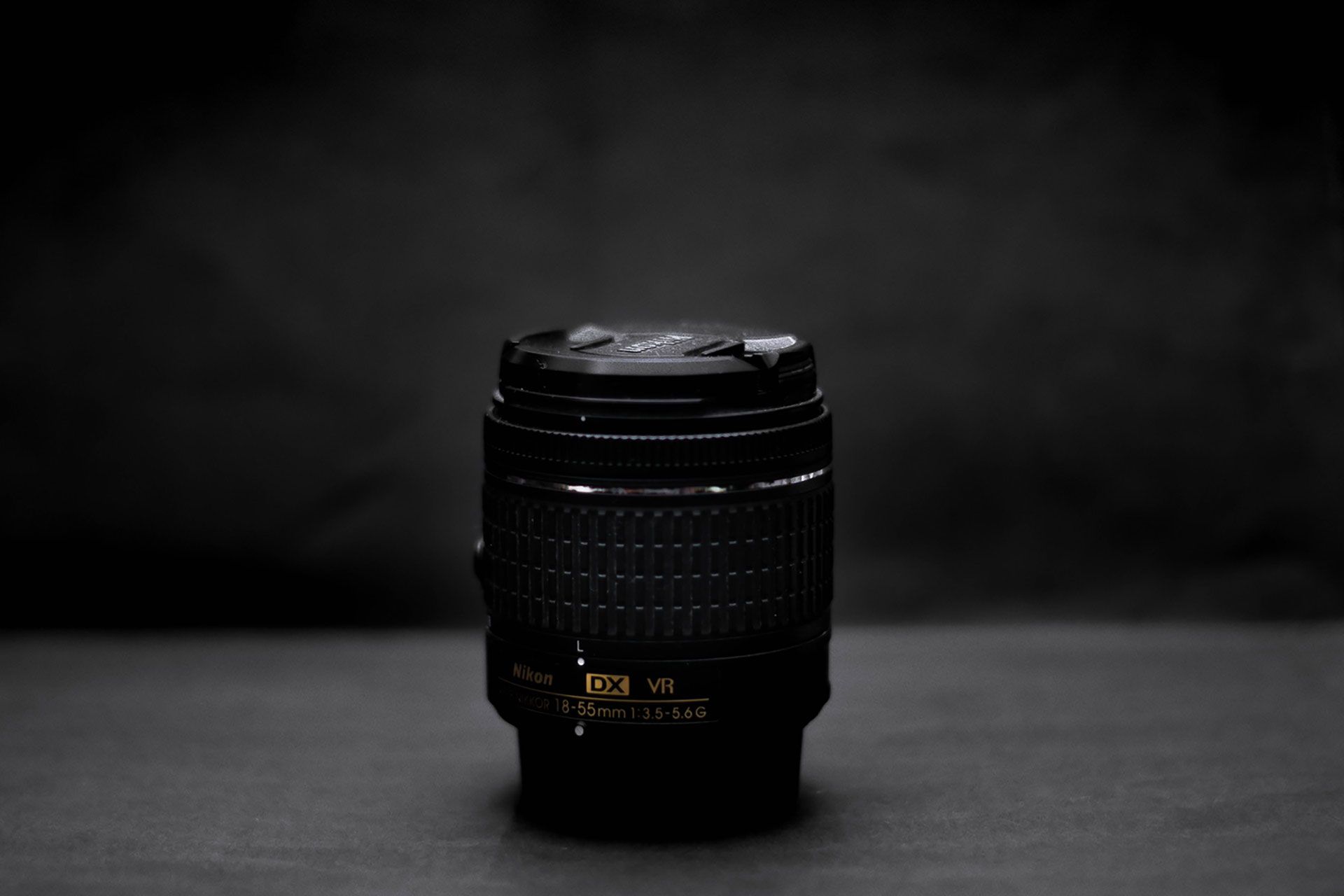
The wide f/1.8 aperture lets in more than 8x the amount of light compared to the standard zoom lens that is provided. This results in sharper images with less motion blur and reduced need to use flash in dimly lit conditions so you can easily capture the atmosphere of a low light environment.
One for All: 3 AC outlets and 3 USB ports power everything on your desk from a single compact hub (18W max output from the USB ports and 1250W from the AC outlets).
High-Speed Charging: Deliver an optimized charge to USB devices with Anker’s world-renowned PowerIQ technology.
Compact and Portable: Less than 2 ½ cubic inches, for maximum space-saving at home or in your travel bag.
Superior Safety: Overload protection and a fire-retardant casing ensure complete protection for you and your devices.
What You Get: PowerPort Cube, welcome guide, worry-free 18-month warranty, and friendly customer service.
Power for Days: Delivers over 7 phone charges to iPhone 8, 5 charges to Galaxy S9 and iPhone X, or 1.5 charges to iPad Air 2.
Simultaneous Charging: Twin USB charging ports let you charge two devices up to 2.4A per port—at the same time (Qualcomm Quick Charge not supported).
Two-Mode Recharging: Use either USB-C or Micro USB, for more convenient recharging.
What You Get: PowerCore Lite 20000 portable charger, Micro USB cable (USB-C cable and Lightning cable not included), welcome guide, our worry-free 18-month warranty, and friendly customer service.
ZOMEi provides different kinds of photography equipment, it’s a famous brand for travel tripods, phone tripods, GoPro tripods for 15 years. What ZOMEi always pursuing is a high-quality tripod. At present, ZOMEi’s travel tripod has been actively demanded all over the world.
ZOMEi M5 Aluminum Alloy Tripod is a good choice for photographers, enthusiasts, beginners, and travelers with lightweight and high quality.
It has 3-layer material for superior durability; Seam-sealed for maximum protection in a downpour or dusty conditions. Ability to get your hands directly on the camera through two cinch-able sleeves gives you easy access to all your camera functions. Compatible with ALL Nikon, Canon DSLRs, and SOME Sony and Olympus DSLR camera bodies
The Gitzo GIGT0545T Traveler Series 0 Carbon Fiber Tripod is a compact support system with legs that fold around the center column and optional head. These reverse-folding legs contribute to the tripod’s folded length of just 14.4″. It extends to 48.2″ high and can hold up to 22 lb. worth of gear.
The tripod employs Carbon exact tubing for added strength and stiffness compared to the Carbon 6X tubes. Traveler G-lock is a pared-down version of Gitzo’s G-lock, specifically designed for the Traveler tripods to reduce overall size.
waka Camera Neck Shoulder Strap is focused on Secure and Durable as NO.1 priority in design, meanwhile it’s also comfortable to wear. Comes with metal quick release makes it compatible with any DSLR cameras (Canon, Nikon, Sony etc) with standard ¼” tripod stud screw.
Compatible with DSLR, mirrorless and compact system cameras with a standard 1/4 tripod mount.
The Giottos Rocket-Air is made from natural and environmentally friendly rubber. The super air stream blows off dust particles, even those attracted by static electricity. Giotto’s patented and unique rocket base design allows the Rocket-Air to stand by itself and prevents accidental blocking of the inlet valve as well as making it easy to store.
Provides 150 watts continuous DC to AC power and 360 watts peak output power to charge multiple electronic devices on the go. Ultra-compact and lightweight design, convenient with no additional wires or assembly required. Directly plug in any 12V cigarette lighter socket. Built-in cooling fan, full protection and auto-shutdown keep your appliance and car from overheating, overloading, low load, short circuit, low voltage and over voltage.