Green transportation systems including electric trains, trams and electric buses, metro combine the advantages of green vehicles with those of sustainable transport.
Hong Kong ranked number one in clean commuting overall, Paris ranked second, and Zurich ranked third. Seven of the top ten spots were in European cities.
While personal vehicles may be the most common mode of transportation, they aren’t always the most environmentally friendly. Especially in large, populated cities, public transportation systems can be a lot more energy-efficient and more beneficial to the environment.
To determine the Top 5 Green Transportation Cities, several factors were taken into consideration, like the average time spent commuting and the system’s hours of operation.
Other factors include how reliable the transportation system is, how much coverage they provide, what the congestion is like during travel times and the system’s ability to lower emissions.
In their new Sustainable City Index, Arcadis ranks the world’s leading cities according to three main sub-indexes:
People, which examines health, education, income inequality, work-life balance, dependency ratio, crime, housing, and cost of living;
Planet, which looks at energy consumption, renewable energy, green space, air pollution, drinking water, sanitation and other environmental factors;
and Profit, which rates cities according to business performance, transport infrastructure, tourism, GDP per capita, employment rates, and other economic factors.
Which are the Top 5 Cities with Green Transportation System?
Let’s start with the world’s top five cities with the green transportation system, according to data from the Sustainable Cities Mobility Index by Arcadis.
Prague has three metro lines covering 65.2 kilometers, serving more than 1.6 million passengers daily. It also has 142.4 kilometers of tram tracks serving almost 900,000 people per day, as well as an extensive bus network. The city has recently been exploring increased use of electric buses and trolleybuses. A fourth metro line is being built.
Efforts to reduce car traffic in the city center such as parking zones and park and ride lots have been underway for several years.
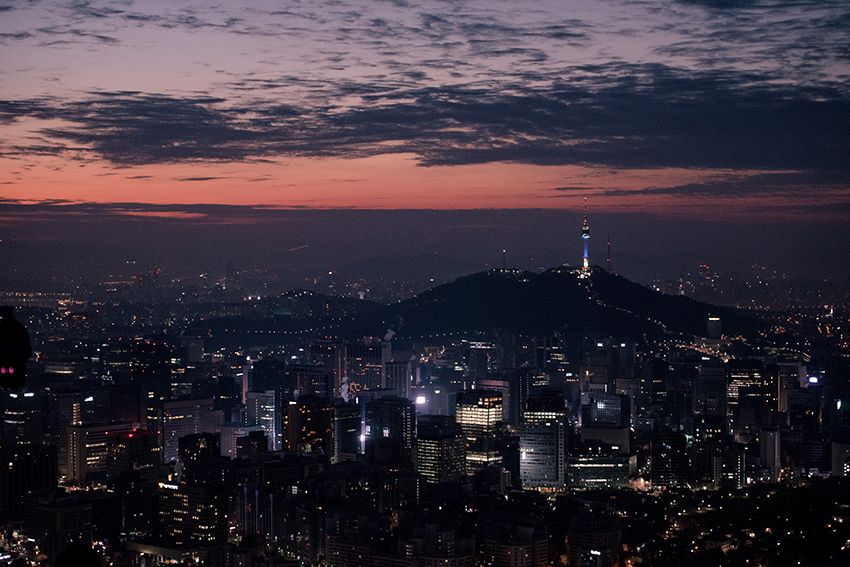
The city has a population of around 25 million people which is about half of the national population. The South Korean economy is ranked as the 13th largest in the world by GDP.
A four-mile elevated highway that once covered the Cheonggyecheon River in the city center was replaced with a riverfront park, high-quality walkways, and public squares.
A range of programs were introduced as part of improving their green transportation Ssstem to encourage citizens to leave their cars at home, for instance, congestion charge on motor vehicles passing through Namsan tunnels, the No-Driving Day campaign, promoting green cars such as electric vehicles.
The city is running one of the biggest infrastructure projects. It aims to create a sustainable and unified city, built upon a renewed public transport system and new metro lines. Paris is working on a plan to double bike lanes by 2020, electric taxi boats will start tests later this year. Diesel cars will be banned by 2025, driverless electric shuttles are being tested.
The greenest and most sustainable forms of transportation are trains, bicycles, and walking. Some of the world’s best and fastest trains have been in operation for more than 25 years in Europe, and more than 40 years in Japan. These include futuristic high-speed trains like the Eurost.
Zurich’s approach to sustainable green transportation system is both highly successful and widely relevant. The city has been able to design and implement a very efficient interlocking multi-modal transit system forming a great network for public transport using trains, trams, and buses. System is so effective and efficient and that most of the Zurich city citizens make use of public transport to get in and around the city.
High-quality public transport at lower costs with smaller infrastructure – it has Europe’s highest per capita use of public transport within two decades of starting its public transit. It is the most populated city in Switzerland. An important factor in creating more sustainable cities is reducing the dependence on the car by creating reliable and useful green transportation systems.
Zurich also imposes a high toll on cars in their effort to keep them away from the city’s main populated areas. The city is working to increase the number of bikers by creating safe, designated bike lanes that don’t overlap with trains, buses, and car paths.
Hong Kong ranked number one in clean commuting overall, Paris ranked second, and Zurich ranked third. Seven of the top ten spots were in European cities.
Hong Kong’s metro system is highly effective for both locals and tourists, which is a large factor in their top spot. Its well-connected and innovative transport network handles an impressive 12.6 million passenger journeys every day. Even with this high number of travelers each day, the city’s public transportation is still efficient for users and the environment.
Public transport is relatively cheap compared to other world cities and less than one-fifth of people in Hong Kong own a car.
The top European cities ranked well due to their organized metro systems and efficient infrastructure. These cities also use a lot of green technology in their transportation efforts, which means they give off fewer carbon emissions.
Botswana with its unique country’s natural resources provides a significant advantage in the tourism sector. Tourism plays a significant role in the national economy and exhibits enormous potential for future growth. Tourism in Botswana is the second-largest income in the country. According to official estimates, Botswana received 1.6 million visitors in 2015 and generated about 1 billion U.S. dollars in monetary gains.
Botswana, a landlocked country in Southern Africa, has a landscape defined by the Kalahari Desert and the Okavango Delta, which becomes a lush animal habitat during the seasonal floods.
In 1990 Botswana implemented a Tourism Policy aiming to increase tourist numbers, government revenue, and employment opportunities. The tourism industry also helped to diversify Botswana’s economy from traditional sources such as diamonds and beef and created more than 150 000 jobs in this sector.
The Botswana Tourism Organization (BTO) is responsible for all operational functions of the tourism sector such as marketing, investment promotion, and the grading of tourism facilities to international standards.
“The government has made a deliberate decision to boost eco-tourism because we are not sure natural resources will last unless we make a point to protect them,” tourism minister Tshekedi Khama said.
Botswana relies on natural resources for both general livelihoods and tourism.
Due to a lack of resources and skills in local communities, the country has often to depend on the assistance of international partners to achieve their dual goals of increasing economic prosperity and preserving natural resources.
Environmental management
Botswana has experimented with various methods of preserving natural resources including community-based natural resource management (CBNRM), which is based on assumption that local people have more incentive and are more committed to the sustainable use of natural resources where they live compared to the more removed government.
To be effective these areas must work closely with the local communities. In other areas park authorities and people living adjacent to protected areas have come into conflict. This often occurred when local people were suddenly denied ancient hunting, fishing or grazing rights, access to ancestral burial sites, or when tourist revenue was accumulated by foreign companies with nothing finding its way back to the local communities.
Botswana seeks to broaden the tourism base by adding more product components and increasing the geographic spread of tourism.
United Nations World Tourism Organization (UNWTO) Secretary-General Taleb Rifai said sustainable tourism has proven not only to boost economic development, create jobs but also to promote the inclusion of communities.
Some of the most popular areas for a safari trip in Botswana include Okavango Delta, formed by a river of the same name, traveling across 22,000 square kilometers of the surface without ever reaching the sea. The water of the Okavango River eventually evaporates in the sand of the unexplored Kalahari Dessert, inhabited by the Bushmen, one of the oldest tribes in the world.
Also in the Kalahari Dessert you can find the Chobe National Park, where is the home to the largest elephant population on the continent, or the impressive biodiversity that populates the entire country, including wild mammals such a lion, elephant, leopard, rhinoceros and buffalo.
Sustainable tourism is a worldwide theme but for the Okavango delta, the uniqueness is in the landscape, the people and the conservation policies of Botswana.
The Okavango Delta region is both a popular tourist destination and a world heritage site as well as one of the largest inland deltas in the world.
While the vast majority of attractions are based on the country’s natural resources, the tourism industry itself makes the very resources it has commodified vulnerable to damage. Large groups of people in tourist groups can disrupt wildlife and lead them to migrate to other habitats that may be unsustainable.
Botswana offers the traveler a choice of accommodation options from top-class tourist hotels, luxury lodges, and safari camps, to budget guesthouses and camping grounds. The major tourist areas have a choice of private lodges, safari camps, and public camping sites.
This country is almost the same size as of France has only 2.2 million population, gained its independence 50 years ago. Besides its ecosystems and a democracy, another valuable resource for the country is diamonds: diamond mines that were exploited by the De Beers Company, but managed by the government of the first and revered President Seretse Khama. Botswana steadily grew at an average rate of 9%-10% of its GDP, and from one of the poorest countries now is becoming an average economy country.
“Diamonds don’t last forever, but sustainable tourism and development do,” says Tshekedi Khama, Minister of Environment, Wildlife and Tourism.
The Botswana government’s National Conservation Strategy and Tourism Policy was created to promote tourism while protecting wildlife areas. Citizens of the United States, South Africa, British Commonwealth countries, and most Western European countries do not need visas for stays of less than 91 days.
Attracting more tourists and being an example of sustainable travel destination is slowly becoming the new economic engine for undeveloped countries.
If you want to explore and learn more about other countries in Africa, check out our section here.
*This article may contain affiliate links. We receive a small percentage of sales made through them at no extra cost to the reader. For more information see our privacy page.
Bulgaria is a Balkan nation with diverse terrain encompassing Black Sea coastline, a mountainous interior and rivers, including the Danube. Bulgaria offers everything from sun-kissed beaches to enthralling historical narratives, buzzing party towns to snow-shrouded ski resorts between its borders.
Travelers will adore seaside resort towns like Albena, Balchik, Burgas, and Varna with miles of sandy beaches and panoramic views of the crystal-clear sea. Bansko and Borovets mountain ski resorts provide winter sports adventure, and the cosmopolitan culinary and cultural scene of Sofia is hard to beat. There is wilderness galore for the outdoor enthusiast at places like Central Balkans National Park with 250 miles of hiking trails, or Vitosha Mountain with two premier nature reserves.
We looked at all the major hotspots that should be on anyone’s Bulgarian bucket list this year – 20 best places to visit in the Bulgaria.
Nesebar is known for its beautiful ruins and superb beaches. The ancient part of the town is situated on an island connected to the mainland by a narrow man-made causeway, and it bears evidence of occupation by a variety of different civilizations over the course of its existence. The most famous churches within the city include St.Stefan Church which dates back to the 11th century and The Church of Christ Pantocrator, which was created in the 13th century.
The town has existed for more than 1,000 years and prominently showcases its rich history through preserved architectural monuments from all its periods. In 1956 is was declared a museum-town – an archaeological and architectural reserve. Visitors can enjoy the beaches along the Black Sea Coast. It is often called, “The Pearl of the Black Sea”. As such, it is a popular seaside resort destination. Its most impressive beach is Sunny Beach.
Varna
Varna is one of the major tourist destinations in Bulgaria and it is often referred to as the sea capital of Bulgaria. Located on the edge of the Black Sea, Varna is Bulgaria’s third-largest city with a long and enthralling history, oodles of crumbling Roman bathhouses and elaborate Orthodox architecture, picturesque beaches with fine golden sand and crystal clear water. There are plenty of other activities to enjoy in the city, including many excellent lively clubs, seafood restaurants, and cocktail bars along Kraybrezhna Aleya. People will find this part of the city quite charming and beautiful at night.
This beautiful city has wonderful beaches, excellent restaurants, and lovely green spaces, also a couple of good surf breaks available if you prefer to surf or bodyboard. Many Bulgarians from other parts of the country go to the city in the warmer months. Rapongi Beach is perhaps the best beach in Varna, as it is well maintained and doesn’t get too crowded. You can also travel north to the resort of Sunny Day or to Siruius Beach, which both stunning locations are popular with tourists.
There’s an international ballet competition, a jazz festival, a folklore festival, and a music festival, just to name a few. One of the most beautiful places in the city is the Sea Garden – the locals love to go there for a walk. Other popular places, you can visit are the National Maritime Museum, the Archeological Museum, or Varna Aquarium.
One of the best and oldest places to visit in all of Europe, Veliko Tarnovo stands out with its remarkable beauty and is a popular tourist attraction. The romantic town, located in central Bulgaria, showcases steep cliffs lined with beautiful, traditional Bulgarian houses.
The River Yantra meanders through Veliko Tarnovo creating a picturesque setting for this over 7,000-year-old historic northern Bulgarian city.
National Revival style houses cling to the hills, making it so easy to fall in love with this inviting city. The city was Bulgaria’s capital between the 12th and 14th century, for 300 years, during the heyday of the Second Bulgarian Empire. Some of the attractions include Tsarevets – a well-preserved significant monument to the Second Bulgarian State, the king’s castle, and the church on the top of the hill. The Stambolov Most bridge over the Yantra River takes visitors to the Asenevtsi Monument, which offers the best views – amazing 360-degree views of the city. Veliko Tarnovo offer a walk along the cobblestone Gurko Street and shop for handcrafted souvenirs at the Samovodska Charshia. You should also try to visit the art gallery, Charshia is a high-energy museum complex of arts and crafts, and traditional Bulgarian food and taverns. Nature lovers will want to see Emen Canyon, Momin Skok Waterfall, Krushuna Falls, and Devetashka Cave outside of town.
Travelers can experience a mixture of natural beauty – courtesy of the wild coniferous woods that blanket the landscapes all around – and unbridled culture and history, from the Tsarevets capitol and the clutch of gorgeous Byzantine churches.
Sofia
Bulgaria’s capital and the largest city offers many things to see and do, which visitors will need to prioritize by interest. Closer to the center you’ll find the ancient remains of the Serdica Fort and the Roman-Byzantine Church of St George were discovered between 2010 and 2012 the ancient city of Serdica was found during excavation works for one of the metro stations.
Some of the most famous attractions in the city include the iconic Orthodox domes and gilded edifices of the Alexander Nevsky Cathedral, the Saint Sofia Church with its subterranean museum and the necropolis, the 4th-century Church of St. George, and the UNESCO-awarded Boyana Church. Sveta Nedelya Square is surrounded by an Orthodox church, a Jewish synagogue, an Islamic mosque, and a Catholic church. For the museum lovers, Sofia is home to the National History Museum where you can see some of the most famous ancient gold treasures in the world, the National Museum of Natural History, the National Archeology Museum, the National Art Gallery which is housed in the former royal palace, and the Museum of Socialist Art.
Sofia is located at the foot of Vitosha Mountain, where you can go hiking and skiing. You’ll find everything from exciting nightlife and affordable accommodation to lovely boutiques and charming cobblestone streets when you visit Sofia.
Plovdiv is the oldest city in Europe to be continuously inhabited, a place where culture and history are paramount, and art and music festivals are frequent. This ancient city sits along seven hills and is well known for its romantic ambiance, thanks to the colorful 19th-century mansions that serve as house-museums, guest homes, and galleries. Plovdiv is Bulgaria’s second-most cosmopolitan city, only behind Sofia, where cobblestone lanes are commonplace. The city’s highlights include the Tsar Simeon Gardens and the artistic quarter, Kapana. The city is also known for having an energetic nightlife, popular among young adults.
One of the most ancient cities in Europe and among the best cities to visit in Bulgaria, Plovdiv surprises visitors with its diversity. Located in southern Bulgaria, Plovdiv is like a museum of Bulgaria’s history. Plovdiv, the second-largest city in Bulgaria, was founded some 6,000 years ago and developed on seven hills, but one of them was destroyed at the beginning of the 20th century.
Plovdiv includes structures from different eras, and it used to be one of the major cities in the Roman Empire. Today, you can visit the remarkably well-preserved Roman Amphitheater, which still functions as an open-air theater, the Roman Stadium, the Roman Forum, and the Eirene Residence.
You can visit the Old Town which will make you fall in love with its cobblestone streets and colorful National Revival houses, most of which have been turned into museums. For a stunning view of the city, climb on one of the seven hills on which the city was built. Ancient Plovdiv is on the Tentative List of UNESCO World Heritage Sites. 2019 will be a great year to visit Plovdiv because it will be the European Capital of Culture.
The Old Town is best known for its Bulgarian Renaissance architectural style, with colorful houses displaying the National Revival’s unique exterior characteristics on every corner.
Plovdiv’s nightlife beckons partiers after hours, as the coffee culture haunts turn hedonist, fuelling nights with indie, jazz and oodles of Balkan beers!
The Belogradchik Rocks are one of the natural wonders in Bulgaria. These reddish rock sculptures in weird forms and shapes are located in northwest Bulgaria. The Rocks offer a natural defense for the famous Belogradchik Fortress, aka Kaleto. The Belogradchik Rocks are included on the Tentative List of UNESCO World Heritage Sites.
Belogradchik Fortress is a manmade dating back to Roman times on the menu, construction set against a stunning outcrop of rocks, the citadel of nearby Baba Vida and the mysterious pre-historic wall art of the Magura Cave to boot!
The Belogradchik Rocks, named in 2009 as Bulgaria’s candidate to be selected as one of the New Seven Wonders of Nature, are a stunning arrangement of strange-shaped sandstone and conglomerate rock formations.
The otherworldly geological wonders that lurk on the edge of Belogradchik town rarely fail to impress travelers who make their way to this far-flung corner of Bulgaria on the northward slopes of the Balkan Mountains.
Rila Monastery
The Monastery of Saint Ivan of Rila is perhaps the most iconic destination in Bulgaria and perhaps the most famous Eastern Orthodox monastery in the world. The 10th-century Rila Monastery was founded by St. John of Rila, known for being an ascetic. He was consecrated here by the Orthodox Church. His tomb and austere dwelling became a holy site and were eventually transformed into a secluded complex.
The monastery is beautifully frescoed and is a fine example of National Revival craftsmanship. The oldest building on the site is the Tower of Hrelja, and it dates back to the beginning of the 14th century. The Rila Monastery played an important role during Bulgaria’s National Revival, in the spiritual and social lives of medieval Bulgarian people. It entered the UNESCO World Heritage List way back in 1983, hailed for its curious intermingling of Mamluk, arabesque, Byzantine and Romanesque styles. The monastery is hidden in the Rila Mountains in southwest Bulgaria.
During the 19th century, a fire destroyed this important complex, but it was rebuilt to its previous splendor between 1834 and 1862. It continues to be a symbol and example of the Bulgarian Renaissance and brings an awareness of the Slavic cultural identity of this time.
Seven Rila Lakes
Located in the northwest part of the Rila Mountains, the highest mountain in the Balkans at over 9,500 feet, Seven Rila Lakes is a natural area of stunning beauty. The lakes are between 6,800 and 8,200 feet above sea level.
Hiking to the lakes uncovers epic scenic views of the rugged mountaintops. The Seven Rila Lakes is a group of glacier lakes, and each of them has its own name that is reflective of their characteristics or shapes: The Eye, The Kidney, The Tear, The Twin, The Trefoil, Fish Lake, and The Lower Lake. The lakes are located in Rila National Park, Bulgaria’s largest national park, just outside Sofia, making an excellent day trip for travelers who love to hike.
Stob Pyramids
The Stob Pyramids are another one of Bulgaria’s amazing natural phenomenon. They are one of the most amazing rock formations, which can be found in the territory of Bulgaria. This amazing rock phenomenon is on the way to the Rila Monastery in the western foot of Rila Mountain. The pyramids have the name of the village of Stob, which is the successor of the ancient Thracian city Stobi, destroyed by floods in the legends.
The pyramids are about 10 – 12 meters high and have various shapes, some are conical and others are shaped like mushrooms. The view to the acute forms of the Stob pyramids is really amazing. Once there were impressive fortress walls and towers, mines and pipelines. It is known that Stobi reached its zenith in the 9th century. Most likely it was destroyed during the 12th century and then restored during the Second Bulgarian Empire. For centuries beautiful legends were worn on the natural phenomenon of the Stob pyramids.
Etara is a one-of-its-kind place that you ought to visit on your holiday. It is located on the northern edge of the Bulgarka Nature Park and has Bulgarian customs. There are various workshops where you can see how traditional crafts were practiced in the 18th – 19th century, and culture on display. You will also find numerous restaurants outside the museum where you can taste the finest Bulgarian cuisine.
Etara is a lovely place to visit on a day trip from Veliko Tarnovo or Gabrovo.
Tryavna
Tryavna is a village in central Bulgaria, situated on the north slopes of the Balkan range, on the Tryavna river valley, near Gabrovo. Tryavna is one of those places with well-preserved typical National Revival architecture. Instead of being in one of those open-air-museum types of villages, you are in the middle of a thriving town.
It is famous for its textile industry and crafts, featuring 140 cultural monuments, museums, and expositions. Tryavna is a town preferred by tourists for its clean mountain air and unique Renaissance architecture. A good road and railroad network connects the town with all farther spots of the country.
Pirin National Park is located in southwestern Bulgaria. Pirin National Park has been declared a UNESCO world heritage site in 1983 and the park is a part of the World Network of Biosphere Reserves.
There are hundreds of different animal species in the park, including the wonderful boreal owl, white-backed woodpecker, fire salamander, agile frog, red deer, and Eurasian three-toed woodpecker. Pirin National Park is an area of more than 66,000 acres. Visitors will enjoy hiking through this massive park filled with rocky mountain slopes, alpine meadows, and alpine lakes.
Sozopol
One of the ancient coastal towns to see in Bulgaria – Sozopol, best known for splendid beaches and nightlife, attracts travelers of all kinds. It is one of the significant cultural centers of Bulgaria and hosts Apollonia Art and Film Festival every year – one of the country’s largest art festivals every September.
The Old Town is a popular destination among the artsy tourists. Fishing boats and rocky shores complement the 19th-century wooden houses and golden-sand beaches and an ancient fortress overlooking the sea and archaeological evidence of a sprawling Christian complex. The New Town is a popular summer resort.
Cape Kaliakra, situated near the Romanian border, is one of the most historic and magnificent of European capes. It sits 70 meters above sea level on the Black Sea Coast and is home to rare birds.
The Kaliakra Fortress is an important part of the Kaliakra Archaeological Preserve. The medieval fortress against the stunning backdrop will take your breath away. Legend has it that treasures of Lysimachus, successor to Alexander the Great, are still hidden in headland caves. Visitors can still see the archaeological site as well as a small museum.
Central Balkan National Park
The Central Balkan National Park lies in the heart of Bulgaria, nestled in the central and higher portions of the Balkan Mountains. It keeps a unique collection of forest massifs, plant and animal species, historical monuments of global significance for science and culture. Incredible landscapes, rock phenomena, beautiful waterfalls can be seen here.
The most interesting park areas for the tourists are North Dzhendem, South Dzhendem, the Rayskoto Praskalo waterfall and Peeshtite Skali (the Singing Rocks). The Central Balkan is one of the last places in Europe, which provides shelter to rare and endangered animals. The visitors of the Central Balkan can enjoy traditional Bulgarian cuisine and the hospitality of the people, as well as the specific folklore and various crafts. The park is under the Birds and Habitats Directives within the European NATURA 2000 network.
Koprivshtitsa
This small town has been one of the most important historical places in Bulgaria from the time of the National Revival (18th – 19th century). Koprivshtitsa is a lovely place that still keeps the spirit of revolutionary Bulgaria and of the April Uprising of 1876.
This museum-village immediately pleases the eye with its numerous restored National Revival–period mansions. This historic town is perfectly set on the banks of Topolnita River and once every four years Koprivshtitsa hosts the biggest authentic folklore festival in the country. The village is full of memorials and museum houses displaying ethnographical treasures, old weapons and farm implements, national costumes, artwork, and jewelry.
Pomorie is a town and seaside resort in southeastern Bulgaria, located on a narrow rocky peninsula in Burgas Bay on the southern Bulgarian Black Sea Coast. One of the cleanest beaches on the Black Sea coast.
The town has two distinct sections — the old town centre to the east and the newer, more touristy section to the west/southwest. The old town centre is a charming location with many small hotels, authentic shops and small restaurants. The eastern tip of the peninsula has a couple of small beaches that are usually less crowded compared to the ones to the north or southwest.
Melnik is the smallest city in Bulgaria and it is home to some of the best wineries in the country. It will take you minutes to walk up the town’s one main street, but you’ll sit for hours at a local tavern, your head spinning under the intoxicating spell of the rich red wines.
For the best views of the Sand Pyramids of Melnik, climb to the St. Nicholas plateau.
Bansko is Bulgaria’s most prized winter sports resort. It’s surrounded by high stone fences, crisscrossed with charming narrow streets, and dotted with beautifully restored ancient houses.
With new lift projects at its back, the dual ski fields of the Chalin Valog and Shiligarnika, hedonistic bars, jazz joints, cross-country trails, the place has plenty to offer. A visit to this town wouldn’t be complete without a trip to one of the local taverns for authentic food, drink, music, and dance.
Photo credit: shutterstock.com
Ruse
It is located along the bank of the Danube River, northeast of Sofia. Ruse known as “Little Vienna” due to its architecture, is also a town of the first Bulgarian paper was printed here, the first railway road was completed here, and the first navy school and weather service were established here.
The town has 19 amazing museums, archaeological reserves, the Rock-hewn Churches of Ivanovo, Cherven Fortress, and the Bassarbovo rock monastery.
The above list of the top places to visit in Bulgaria is just a sneak peak into what this small Balkan country has to offer.