• About
  • Affiliate Disclosure
  • Privacy Policy
  • Terms of Use
  • Contact Me
NEVER MISS A TRAVEL DEAL
Main LogoLight Logo
  • Home
  • Destinations
    • Africa
    • Asia
    • Australia
    • Europe
    • Balkans
    • Caribbean
    • North America
    • Oceana
    • Central America
    • South America
  • For You
    • Resources
    • Questions
    • Travel Tips
    • Solo Travel
    • Travel Inspiration
    • Photography Guide
    • Motivation
  • Substainable Travel
  • Travel Guides
  • Get Involved
  • Travel Gear
    • Photography Gear
    • Travel Gear
    • Women’s Packing List
    • Men’s Packing List

5 Things to Know About the Sunscreen and How to Protect the Coral Reef

September 14, 2019
1
0
Share

Some of the pollutants slowly trickling into the oceans are the chemicals in many sunscreens. As swimmers jump into the sea, their sunscreen washes away and filters into the water. Scientists who have become aware of the dangerous effect these chemicals have on coral reefs have developed the best reef-safe sunscreen brands to protect you and the ever-important marine life that inhabits our oceans. Knowing coral reef safe sunscreen information will help keep the sea beautiful and alive.

“Eighty-five percent of the Caribbean coral reefs died before 1999 or 2000. That wasn’t global warming. It’s pollution,” says Dr. Craig A. Downs, Ph.D., executive director of Haereticus Environmental Laboratory.

Making an eco-savvy choice, therefore, and using reef-safe sunscreen matter. And not only for the corals.

Dr. Downs and his group began taking a gander at particular synthetic concoctions and found that oxybenzone and octinoxate are the principle guilty parties. The reason they are so generally utilized in sunscreen is that they assimilate the unsafe UV beams. For humans, oxybenzone and octinoxate are chemical sunscreen ingredients that keep harmful UV rays from penetrating the skin, killing cells, and causing a burn. However, they have the opposite effect on coral reefs. These reefs, which are generally bright colors, end up bleaching to bone white under the harsh rays of the sun when they come into contact with these chemicals.

Oxybenzone, for example, is toxic in four different ways: it causes damage to the DNA that may lead to cancer and developmental abnormalities, it is an endocrine disruptor, it causes deformations in juvenile corals, and, lastly, it leads to bleaching.

Dr. Downs points out that certain preservatives found in sunscreens are also toxic: parabens such as the commonly used methyl paraben and butyl paraben, or phenoxyethanol

Another safe alternative to oxybenzone and octinoxate is non-nano titanium dioxide. Before purchasing your next bottle of sunscreen, also check the list of for any of the toxic preservatives we mentioned.
Hawaii is planning on banning certain sunscreens in 2021 that contain harmful compounds.
In addition to oxybenzone and octinoxate, read the label on your sunscreen to see if it contains any of these other destructive chemicals: homosalate, octisalate, octocrylene, avobenzone, dimethicone, parabens, BHT, nanoparticles, propylene glycol, and retinyl palmitate.

Here are five reasons why your choice of sunscreen matters.

Table of Contents
  1. 1. Chemical Sunscreen Can Awaken Coral Viruses
  2. 2. Chemical Sunscreen Ingredients Can Bleach or Kill Corals
  3. 3. Chemical Sunscreen Can Harm More Than Corals
  4. 4. Sunscreen Pollution Threatens Local Economies
  5. 5. Chemical Sunscreens Affect Humans Too

1. Chemical Sunscreen Can Awaken Coral Viruses

Sunscreens washed off into the ocean each year change the chemical composition of the water and make it a thriving place for viruses and bacteria. Some of these viruses attack corals, causing them to expel their life-giving algae, a situation that causes coral bleaching and the viruses spread to the surrounding coral communities.

2. Chemical Sunscreen Ingredients Can Bleach or Kill Corals

Besides viruses, research has also shown that some ingredients in chemical sunscreens can cause coral bleaching and potentially kill these organisms.

While most countries implementing sunscreen bans fight against oxybenzone and octinoxate alone, scientists have identified that butylparaben and 4-methylbenzylidene camphor can also have a similar action.

Using a sunscreen free of these ingredients is essential if we want to preserve the integrity of the marine ecosystem.

3. Chemical Sunscreen Can Harm More Than Corals

The compounds that cause coral bleaching can also affect other forms of marine life. Fish are also affected by oxybenzone and octinoxate.

Here is one example from Dr. Downs, who was on a working visit at the Bahamas, he was conversing with an administration worker at supper who shared how much he loved the coconut kind of the neighborhood angle they were eating on.

“We solicited the gourmet expert what kind from flavoring he put in it, and he stated, ‘simply salt.’ The coconut was some recombinant aroma of sunscreen. That is a substance aroma. It’s a terrible, dependable scent that will amass in life forms thus we were tasting it in the fish,” Dr. Downs explained.

So what can you do next time you hit the beach to prevent further damage? First of all, forget about aerosols.

These substances act as hormone disruptors and induce feminization in male fish. This leads to the interruption of their sexual activity, affecting the reproduction of many species

4. Sunscreen Pollution Threatens Local Economies

The death of coral reefs leaves many species of fish and crustaceans without a habitat; a situation that leads to the death of this marine wildlife. Combined with the affected fish reproduction, chemical sunscreens contribute to the extinction of many fish species.

This has two important consequences: famous diving spots become sterile and unattractive and less fishing possibilities for local businesses who base their subsistence on fishing.

5. Chemical Sunscreens Affect Humans Too

Chemicals in sunscreen are not only bad for the environment. They are bad for humans too. Besides rashes and allergic reactions, researchers also investigate the carcinogenic effects of both oxybenzone and octinoxate.
Other chemicals typically used in these products also act as hormone disruptors and can affect both fetuses if used by pregnant women as well as infants and toddlers.

Considering the negative impact chemical sunscreens have on both us and the environment, changing our habits and using an eco-friendly approach matters.

Coral Reef safe Sunscreen
Photo credit: XL Catlin Seaview Survey/AP

Natural mineral sunscreens are undoubtedly a better choice; furthermore, you can use other eco-friendly ways to protect yourself from the sun while also safeguarding the global economy and our ecosystem.

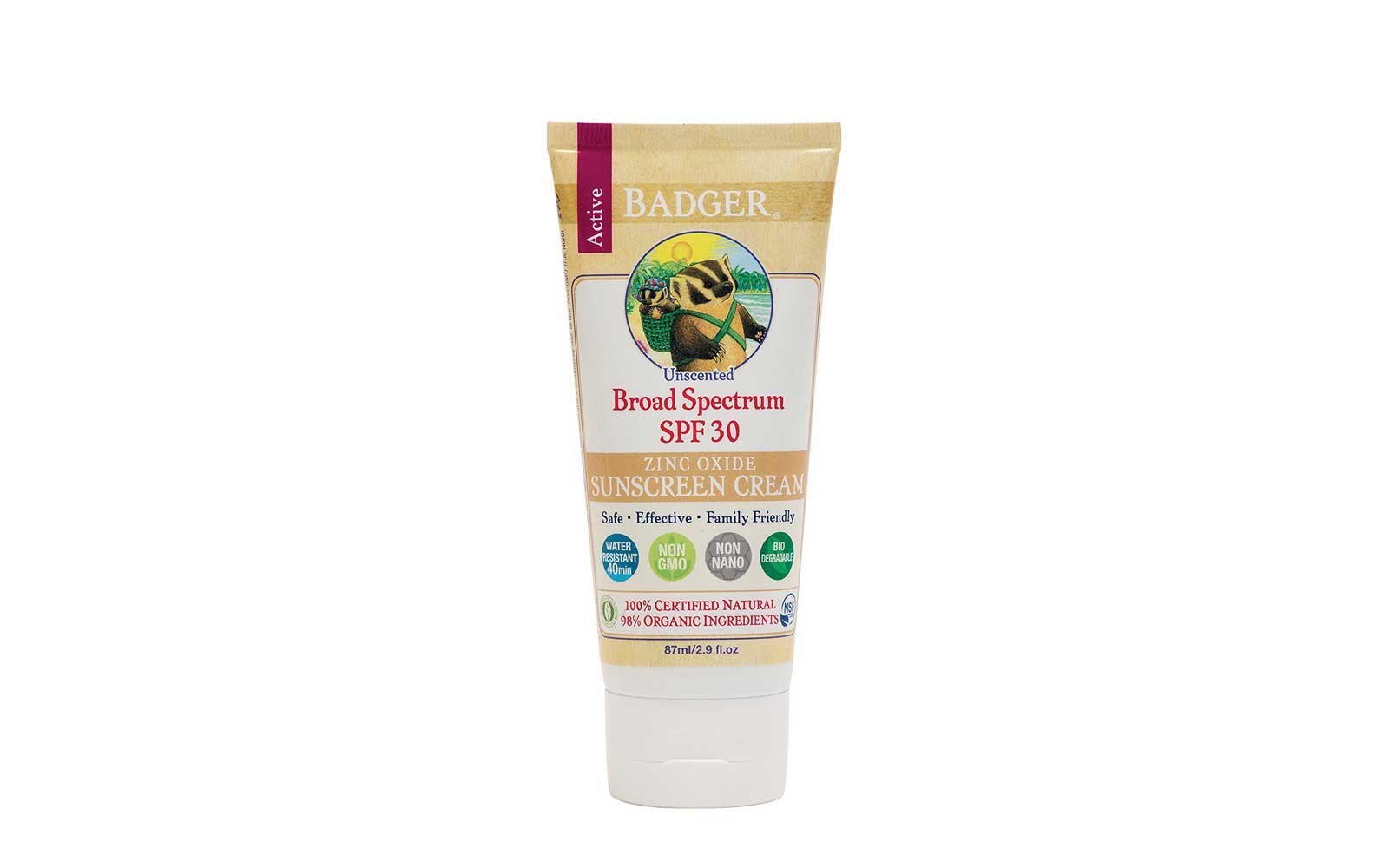
Another option to help preserve the environment is to purchase sunscreen safe for coral reefs. Badger Balm is a family-run business that is committed to creating effective sunblock powered by nature to protect the world. One of the best reef safe sunscreen brands, their rigorous standards for their products makes it safe for children, adults, and the ocean, slowing the killing of coral reefs. In addition to other natural body products, they offer kids, sports, active and daily sunscreen safe for coral reefs so that no matter when you put it on, it’ll protect your skin and the environment.

Raw Elements was founded by an ocean lifeguard who daily watched beachgoers slather on chemicals that would wash off in the ocean, killing coral reefs. This set him on a journey to create sunscreen safe for coral reefs. To further protect more of the environment, they offer some sunscreens in plastic-free packaging to reduce the amount of waste that pollutes the land and sea. Their natural sunblocks are designed with safety and nature in mind at every step of production.

Raw Love sunscreen is made using coral reef safe sunscreen information for people who love jumping into the ocean to swim, dive, or surf. With all-natural ingredients, their sunscreen will protect your skin from the damaging effects of sun exposure, in addition to protecting the ocean. While they don’t offer the range of sunblock options as other best reef safe sunscreen brands, their product is both effective and safe for humans and marine life.

Having coral reef safe sunscreen information can help you make informed decisions when it comes to purchasing sunblock for your beach vacation.

Remember to double check the sunscreen ingredients and the label – each of our decisions matter to save the coral reefs!

Photo credit: Tom Fisk from Pexels

For a complete list with reef-safe brands check out our post about 10 Brands Sunscreen to Try that Are Not Killing Coral Reefs

Total
0
Shares
Share 0
Tweet 0
Pin it 0
Share 0
Coral Reefeco-travelEnvironmentally FriendlySunscreensustainable tourismSustainable Travel
Related Posts
Ditch the Plastic Straw

Why Ditch the Plastic Straw

September 25, 2019
0
1

by Joe Clark from Kalleco

HELPING THE ENVIRONMENT ONE PLASTIC STRAW AT A TIME

Worries about plastic pollution led to us launching our range of eco-friendly drinking straws. Reading about the damage being done to wildlife, seeing first-hand the damage that was being done to coastlines and beaches, and then researching about the extent of the plastic pollution inspired us to make a simple change to start to improve our environmental impact. A straw seems like a small thing, but McDonalds use 1.8 million straws a day in the UK alone, and if carrying a metal straw can help to cut those numbers, it’s a start.

Ditch the Plastic
Photo by Magda Ehlers from Pexels

The UK government has a plan to drastically reduce single-use plastic waste, including straws, by 2025, and other countries such as Taiwan are following that lead. Metal straws are a way that I can make a contribution to improving the environment, and since I started carrying them there has been a noticeable difference in my attitude towards other unnecessary waste.

METAL STRAWS

Metal straws have got a long history – the ancient Sumerians used straws made of precious metals to get to the bottom of the fermented drinks that they made.

5000 years later, and straws have ceased to be solely a means for rich people to get drunk. The current popularity of straws actually started around a hundred years ago in America, when people realized the public health dangers of the newly popular soda fountains in America (whilst the soda was clean, sharing cups was not).

The solution? Straws: often rye straw. The problem with this was that it often fell apart, and imparted some of its flavors into the drink. Eventually, with this being America, capitalism found an answer and paper straws replaced the 100% natural answer that had already been provided. Once technological advances had given us plastic, that took over. Soggy straws were a thing of the past. If you want more information on the history of straws to check out this great article in National Geographic.

WHY GO REUSABLE?

Plastic straws are much cheaper to produce than paper straws, and paper still produces waste which then relies on being recycled. This is why we think carrying reusable eco-friendly metal drinking straws is a great way to get around the problem.

There are a number of reasons that people want to use straws, including;

  • Iced drinks in summer can be difficult to get to the bottom of without either a straw or a face full of ice;
  • If  you have sensitive teeth like me, a metal straw means that you can enjoy a refreshing drink without the pain that can come with it;
  • Dentists also suggest that using straws can reduce the impact of sugary drinks on your teeth (annoyingly even natural sugar causes damage so fruit juices can be damaging);
  • Thick drinks can be as difficult to drink as icy ones, so using one of our metal smoothie straws can stop you getting a smoothie on your cheeks and in your hair;
  • People also like to keep their makeup in place, and a straw stops you need to reapply your lipstick or lip gloss.

We know that plastic waste is a big problem, and globally estimates suggest that as many as 100 marine animals die each year from plastic pollution, as well as around a million seabirds. It goes without saying that even if these estimates are exaggerated, they are far too high.

PLASTIC POLLUTION

metal strawOwning reusable products can help to bring the amount of plastic used down, whether it’s reusable bags, metal straws, a drinks bottle, or glass jars for storing loose grains, powders and rice. For those who don’t have a physical need for a plastic straw, this is one of the places where we think individuals can make the biggest impact. Carrying your reusable metal straw, in its handy pouch, with its straw cleaning brush, means you can still enjoy the drinks you love, and you can pass on plastic.

Carrying your reusable products with you also shows businesses that there is another way. Saying no to plastic can make people think twice before putting a plastic straw in every drink, wrapping produce in plastic bags or cling film, or giving you a takeaway cup for an inside drink. Raising awareness can be as simple as demonstrating good behaviors.

Photo by Christopher from Pexels

Looking for more enviromental-friendly tips? Check out our section sustainable travel resources.

Taiping Malaysia

10 Best Things To Do In Taiping, Malaysia

May 29, 2019
0
1

Taiping is a charming old tin-mining town in Perak, northern Malaysia, between the strong mountains of Ipoh and the murky seas of Georgetown. This small city is not known as a popular tourist spot, but it contains such a rich history of the country, the first railway, the oldest museum, good food, and scenic views of mountains, lakes, the first zoo, the oldest prison. and centuries-old rain trees.

The name Taiping is made up of two Chinese characters (tai – ‘great’) and (ping – ‘peace’). The area developed quickly in the 19th century when tin was discovered. The discovery of tin deposits in the area attracted settlers from China.

The months of June to August may be more convenient due to the slightly warmer and drier weather.

Taiping Lake Gardens
Photo credit: Hams Nocete / Flickr

Taiping Lake Gardens

Taiping Lake Gardens opened in 1880 becoming Malaysia’s first park, built on the site of an old tin mine, its sprawling 62-hectare forest and lake offer a perfect spot for a picnic, chill out or relax. There are plenty of well-maintained tracks around the lake or you can rent a variety of small boats from the Pusat Rekreasi Dayung. There are lots of various plants, iconic rain trees that are dramatically bent downwards towards the lake that makes walking around it a wonderful experience.
Check this video taken from DJI Phantom 3 Profession from Mode Media MY

The Lake Gardens are also popular with cyclists as well as groups of martial artists.

Taiping Zoo

Taiping Zoo is Malaysia’s oldest zoo that houses more than 1,000 animals or 180 species of amphibians, mammals and reptiles. The zoo is located nearby Taiping Lake Gardens. It is also one of the popular things to do in Taiping, and the zoo has active participation in conservation and breeding efforts.

Perak’s oldest church

All Saint’s Church along Taming Sari Street is Perak’s oldest church. It was the first church in the Federated Malay States, founded in 1886. The church features a timber facade and gothic architectural design, with a small adjacent cemetery. Its cemetery is laden with beautifully crafted tombstones of European settlers.

Muzium Perak
Photo credit: Unitpelanconganmpt

Malaysia’s first-ever museum

Muzium Perak, otherwise known as the Perak Museum, was the first museum established in Malaysia in 1883. Located at the intersection of Jalan Muzium and Jalan Taming Sari, it sits directly opposite the Taiping Prison.

The 8474 exhibits displayed show Malaysia’s history, zoology, and geology, amongst many other parts of old history that have long been forgotten. Some of the exhibits show the culture and products of the indigenous tribes of Perak, including the Senoi and Negrito tribes.

electric shuttle bus
Photo credit: Rafihomestay

Explore Taiping for FREE with an electric shuttle bus

After Taiping was established as a Heritage town, the shuttle buses were gifted to Taiping by the Japanese government. Not only are the shuttle buses convenient for tourists to go sightseeing in, the buses are also environmentally friendly. Buses stop in a total of thirty-nine places including Taiping Museum and Taiping Lake Gardens.

Visitors can board the bus along the Taiping Heritage Trail, the Zoo, Clock Tower, or Museum.

Maxwell Hill
Photo credit: SRTG / wikipedia

Maxwell Hill

Founded in 1884, it is the oldest hill resort in Malaysia. It is approximately 1250 m above sea level. The name Maxwell comes from the first British resident of assistant of Perak. The hill was supposed to be a tea plantation, but the tea plants didn’t grow very well here, so the British planters moved to Cameron Highlands instead.

You can see different types of trees and plants here due to the slightly lower temperatures from the rest of the mainland.

Taiping Railway Station
Photo credit: Chongkiann / wikipedia

The Taiping Railway Station

Malaysia’s first railway station was situated in Taiping and was opened in 1885 when the Taiping-Port Weld Railway Line, Malaysia’s first, was opened.
Located about an hour drive away from Ipoh, Taiping Railway Station has been a heritage building in town, in which it acts as part of the history. The station remains in the state as a heritage site and serves as a tourist attraction.

Taiping Railway Station has a gallery explaining the 33 things that happened first in Taiping.


View this post on Instagram


The beauty of Perak’s Nature! . . . #matangmangroveforestreserve #kualasepetang #Perak #Tourismperak#VisitPerak2017 #Malaysia#malaysiatrulyasia #travel #passportready#wonderfuldestinations #lonelyplanet#ttraveldeeper #travelculture#ourdailyplanet #Asia #bestdestinations#visitperak

A post shared by Visit Perak #tourismperak (@tourismperak) on Oct 15, 2016 at 8:15am PDT

Matang Mangrove Forest Reserve

Covering an area of more than 40,000 hectares, Matang Mangrove Forest Reserve is recognized as one of the most well-managed expanse of mangrove swamps in the world. Established in 1902, it is the largest mangrove reserve in Malaysia. Mangrove forests are considered as one of the most productive ecosystems in the world and have a well-established ecological, economic and cultural importance.

The state of Perak has received various international awards for its excellent maintenance of this mangrove.


View this post on Instagram


Everyone is just doing their own thing – can’t stop laughing at the kid in the float with the ultraman right in his face, obstructing his view – why would anyone invent such a sadistic float? Lol #burmesepooltaiping

A post shared by Karen Eva Chin (@karenevachin) on Oct 4, 2016 at 10:06am PDT

Burmese Pool

The Burmese Pool is a large rock pool along a stream at the foothills of Bukit Larut, an especially popular weekend nature attraction among locals.
The area is popular with the locals who come here to bath in the river. Burmese Pool got its name from the natural rock pool fed by a waterfall.

Spritzer EcoPark
Photo credit: spritzerecopark

A mini golf course in Spritzer EcoPark

Opened in 2015, by Malaysia’s largest bottled water manufacturer, dedicated Kidz Zone and 18-Hole Mini Golf, an ideal family retreat, the Spritzer EcoPark has a mini-golf course, and a rainforest walk with scenic views of the park. Entry to both the EcoPark and the bottling plant is free.

Watch this video from Malaysia Truly Asia to find out what are the must visit places when you are in Taiping.

Want to learn more about sustainable travel? Check our other posts about sustainable travel destinations.

Main photo credit: Gary ToddFollow Flickr

1 Comment
    How Plastic Pollution Affects Marine Life? – Earth Needs Your Help says: Log in to Reply
    May 22nd 2021, 4:18 pm

    […] Disruption to the cycle of coral reefs. […]

Leave a Reply Cancel reply

You must be logged in to post a comment.

Sunscreen Is Killing Coral Reefs 10 Brands Sunscreen to Try that Are Not Killing Coral Reefsby padmin / September 13, 2019
7 Best Filtered Water Bottles for Travelby padmin / September 15, 2019Water Purifiers for Travel

“Travel in a respectful way. Don’t harm cultures or lands but seek ways to improve them. Stay in lodges and hotels that are ecologically sound, that use solar, recycle and employ locals. Purchase goods and services that benefit the local economy.”

Latest Travel Tips

Subscribe to Our Newsletter & Get Latest Updates.

Affiliate Disclosure: As an Amazon Associate, we may earn commissions from qualifying purchases from Amazon.com. You can learn more about our affiliate policies here.

© 2025 The Sustainable Travel. All rights reserved.
Created by  PND Design | SEO by: SEOCrunches

  • About
  • Affiliate Disclosure
  • Privacy Policy
  • Terms of Use
  • Contact Me