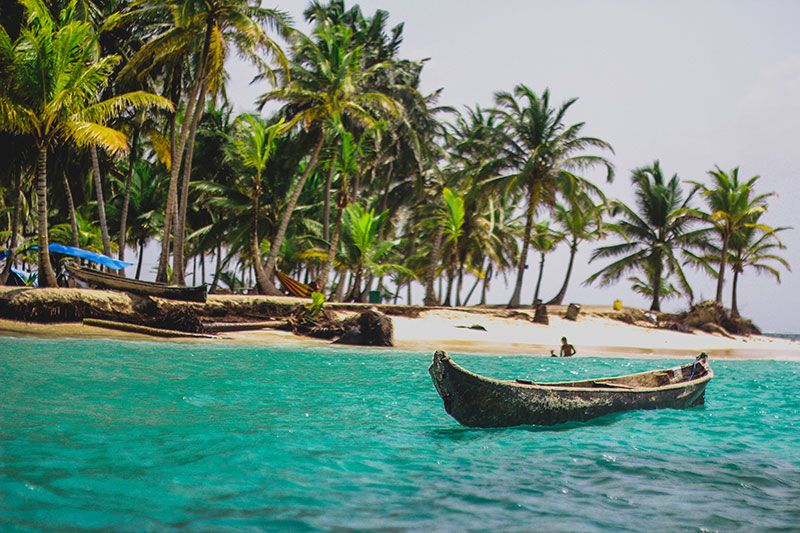
San Blas Islands are part of Panama and it is an archipelago with around 370 islands and small sandy islands part of coral reefs. Only 49 of them are inhabited and mostly by the local Kuna Indians.
It is easy to get to.
The San Blas Islands are located in the Northwest of Panama, which borders Colombia in the East and Costa Rica in the West. You can fly from Panama straight into the San Blas Islands or you can take a boat from either Cartagena or Capurganá.
The San Blas Islands are remote but don’t feel overwhelmed by getting here.
If you don’t want to cross the jungle or open waters of the Caribbean Sea you can use a plane to get to San Blas. You can book flights at Air Panama or Aeroperlas, but make sure you book in advance.
Discover the pristine and untouched archipelagos in the world
Most of these impressively pristine islands have few roads and even fewer people. Here you can discover many new species that are unknown to the science in some of those uninhabited islands. If you are searching for that desert island feel, San Blas is the perfect destination.
San Blas is also known to have some of the best spots for snorkeling in the Caribbean of Central America. Many of the islands are ringed by healthy coral reefs and gorgeous water. The coral reef attracts many stunning species. The best time to go snorkeling is from June to October because the water visibility is better and there are fewer currents.
Photo credit: Markus Leupold-Löwenthal / Wikipedia
The Kuna People
The real name of San Blas is Kuna Yala – Land of the Kuna. The Cuna are famous for their bright molas, a colorful textile art form made with the techniques of appliqué and reverse appliqué.
About 50.000 Kuna’s live on the 49 major islands of San Blas and are controlled by their own community leader called a Sahila.
The island is picture-perfect with lapping waves, swaying palm trees, and gentle breezes and no Wi-Fi or TVs. Evenings are leisurely, with everyone relaxing and enjoying the slow Caribbean pace.
San Blas is an indigenous territory located northeast of Panama. Discover the San Blas Islands and relax in a typical rustic bungalow over water, hosted by a native Guna family. The San Blas Islands are popular with eco-tourists due to their pristine natural state.
Featured image photo credit: Marc Veraart / Flickr
Vancouver is a coastal seaport city in western Canada, located in the Lower Mainland region of British Columbia. It is among Canada’s densest, most ethnically diverse cities.
It is well known for its majestic natural beauty, as it is nestled between the Coast Mountains and the Pacific Ocean. It is frequently ranked as one of the “best cities to live in” and is certainly a beautiful destination to visit.
Here are the top 10 Things Vancouver Is Famous For
Stanley Park is a magnificent green oasis in the midst of the urban landscape of Vancouver. The park is a 405-hectare public park that borders the downtown of Vancouver and is mostly surrounded by waters of Burrard Inlet and English Bay. The park has a long history and was one of the first areas to be explored in the city and enjoy scenic views of the water, mountains, sky, and majestic trees along Stanley Park’s famous Seawall. Enjoy kilometers of trails, beautiful beaches, local wildlife, great eats, natural, cultural and historical landmarks.
In 2010, the Olympic Games came to Canada and were hosted in the winter ski resort of Whistler Blackcomb, less than 2 hours north of downtown Vancouver. For the first time, Canada won gold in an official sport at an Olympic Games hosted at home and broke the record for the most gold medals won at a single Winter Olympics.
The term “Hollywood North” has been used to describe aspects of Vancouver film and television production since the late 1970s. It became known as “Hollywood North” for its role as a production center for US feature films shot in British Columbia.
Some of the most popular movies filmed in Vancouver include four films in the Twilight Saga (New Moon, Eclipse, Breaking Dawn Parts I & II), three X-Men films (X2, X-Men: Last Stand, X-Men Origins: Wolverine), Night at the Museum, and Mission Impossible: Ghost Protocol.
Marijuana Vancouver
Cannabis in Canada is legal for both recreational and medicinal purposes. Cannabis in British Columbia (BC) relates to a number of legislative, legal, and cultural events. The British Columbia cannabis industry is worth billions annually and produces 40 percent of all Canadian cannabis. Drug-impaired driving will continue to be illegal.
Vancouver has surprisingly mild winters compared to many other cities in Canada. The city is Canada’s third most rainy city, with over 161 rainy days per year. As measured at Vancouver Airport in Richmond, Vancouver receives 45.40 in of rain per year.
Gastown is the original settlement that became the core of the creation of Vancouver. Today the district retains its historic charm and independent spirit with victorian architecture houses and some of the best culinary fare in Vancouver. Gastown is a mix of “hip” contemporary fashion and interior furnishing boutiques, tourist-oriented businesses, restaurants, nightclubs, poverty, and newly upscale housing.
The Museum of Anthropology at the University of British Columbia campus in Vancouver, British Columbia, Canada is renowned for its displays of world arts and cultures. It is a major tourist destination, and a research and teaching museum. MOA houses close to 50,000 ethnographic objects, as well as 535,000 archaeological objects in its building alone.
The Dr. Sun Yat-Sen Classical Chinese Garden is the first Chinese or “scholars” garden built outside of China, and is located in Chinatown in Vancouver and named the World’s Top City Garden by National Geographic. Entry is free to the Sun Yat-Sen Park, but there is an admission fee to enter the Dr. Sun Yat-Sen Classical Chinese Garden.
Vancouver isn’t all about the outdoors as it offers a variety of theatre, concerts and other cultural events. Vancouver has all kinds of festivals and events during the year. From culinary to culture, performing arts to Pride, you’ll find a festival or special event that attracts your interests. During summer, various communities take advantage of the sunny weather to put on big celebrations with tons of different events open to everyone with unique food experiences, dynamic entertainment through celebrities and diverse food.
Just 15 minutes from downtown Vancouver, Grouse Mountain attracts locals and tourists and provides spectacular views of Vancouver’s North Shore. Grouse Mountain is a popular all year-round mountain playground.
The ways in which the tourism industry could promote sustainable tourism and practices, rather than damage local environments and cultures, are getting explored more and more from non-governmental organizations, industry, trade unions, local authorities and governments.
The regular traveler needs to be more involved into the eco-travel and sustainable idea and adopting to increase sustainability; be it to the environment, local community projects or initiatives, through animal experiences and especially when sourcing hotels.
Worldwide tourism accounted for 8% of global greenhouse gas emissions from 2009 to 2013, new research finds, making the sector a bigger polluter than the construction industry.
The global tourism industry has been growing at an annual rate of around 5 percent, outpacing the growth of international trade.
What is Sustainable Tourism?
Sustainable Tourism is a traveling system that is deemed to have a more positive impact on the environment than the negative impacts. Sustainable travel is becoming a popular venture where tourists get inspired to partake the eco-tours, which are fun and adventurous.
Tourism is one of the fastest-growing industries in the world and is a major source of income for many countries. Tourism also provides many jobs which have helped restore local economies.
Most people like traveling, going on a holiday, but tourism can also cause serious problems, such as loss of cultural heritage, economic dependence, and ecological degradation.
Learning about the impacts of tourism has led many people to find more responsible holidays. These include various forms of alternative or sustainable tourism such as: ‘nature-based tourism’, ‘ecotourism’ and ‘cultural tourism’. Sustainable tourism is becoming so popular recently.
According to the World Tourism Organization, sustainable tourism is “Tourism that takes full account of its current and future economic, social and environmental impacts, addressing the needs of visitors, the industry, the environment, and host communities”
How to travel Better and Sustainably
As tourists, we should be mindful of how we travel and our impact when we arrive in a destination.
Photo credit: Eberhard Grossgasteiger from Pexels
1. Take a nonstop flights
The number one easy green tip: book a nonstop flight. Look for the shortest flight path to your destination. Takeoffs and landings to cause most of a plane’s carbon emissions
Where possible book for direct flights, because use the least amount of fuel, it’s simple and efficient and you help to reduce the plane’s carbon emissions which are generated mostly from taking off and landing.
2. Research the accommodations.
If you plan to stay in a hotel, choose a place that holds itself to high environmental standards and ask the management to share their sustainability policy. They should be certified by a third party, such as Rainforest Alliance or the Global Sustainable Tourism Council. Choose local places to stay, as opposed to a large foreign corporation. That way you help a greater portion of the profits to stay in the community.
3. Travel with reusables.
Create a habit to pack a reusable water bottle, a travel mug, a cloth shopping bag to use for grocery purchases, a metal straw, utensils, and a container for leftovers. If you have these with you, you’ll never need to use single-use disposables.
4. Support local restaurants.
Spend time and have a meal in restaurants that are run by locals and support their small businesses as opposed to having multiple meals at the hotel. This is a good reason to don’t choose All Inclusive. Supporting local restaurants usually means locally sourced ingredients and it is a great way to meet locals who are enthusiastic about you trying their traditional food. All-inclusive package holidays mean you pay up-front for your accommodation, food and activities. This means tourists have little incentive to go elsewhere and often do not go out to local restaurants
Photo credit: Artem Beliaikin from Pexels
5. Buy souvenirs from local stores.
If you have to purchase souvenirs – buy them from authentic artisans and purchase unique local handcrafted items. Avoid purchases that will get tossed in the trash eventually. Avoid imported souvenirs that have a larger carbon footprint. Check where an item is made; you want something that’s truly local. Invest in things with value, such as art, textiles, and ceramics.
6. Pack smart. Pack smart
It is important thing is to pack light. It will make your life so easier. A great quote from Oneika Raymond can remind you of the importance of luggage:
“For every hotel with a luggage cart and paved street, there’s a town on a mountaintop on the Italian coast with 150 stairs. Try rolling that bag then.”
Avoid plastic at all. Especially, plastic bags and bottles. Instead, bring a reusable water bottle that you can refill and carry your own linen bags. Many local sustainable accommodations can provide water fill-up stations as well as reusable bags in your room.
The global travel community can change the way we travel and help preserve a lot of the world’s resources. If we do not do the necessary steps, our future generations may not experience what we have been fortunate to see.
You can find laundry all over the world, so you don’t have to pack many clothes! Havier luggage contributes more to carbon emissions because the plane requires more fuel to carry the heavier loads.
Remember to carefully select your personal care products, especially sunscreen. Many products are packed with chemicals in that harm not only you but the environment too.
Try to use toiletries that come in paper packaging rather than plastic. You can find my eco-friendly travel packing list here.
7. Volunteer with NGOs and Join Community Tourism Projects.
Always research volunteering opportunities and the organizers to ensure that your time, money and resources are actually going to a good cause. Take opportunities to involve yourself in local projects and community tourism organizations. These may be volunteering opportunities or a chance to learn about local life and practices.
8. Use sustainable tour operators with green accreditations
Whenever you can ensure to walk instead of taking public transport. This is not only better for carbon emissions, but it has a lot of health benefits for you as well.
Choose places that aren’t so far, that you can reach without relying on need to use a car, or that is pedestrian- or bicycle-friendly.
9. Walking where possible
Before you book your tours, do research and look for accreditations such as GSTC, Green Globe, Rainforest Alliance, EarthCheck, Green Tourism Business Scheme (UK) and other regulatory bodies.
Read reviews on third party websites such as Google, TripAdvisor, and TrustPilot reviews. Read reviews and blog posts from travel bloggers who you trust.
10. Share your sustainable travel experiences
Share your responsible travel experiences and stories with your family, friends or even people you meet, on social media! The more you talk about the way you travel, the more you reinforce how important it is to eco-travel.
Sustainability and Eco-awareness are incredibly important topics – how have your travels/trips been influenced by this? I’d love to hear your thoughts on Sustainability and Eco-tourism? What do you do in support of reducing carbon emissions?
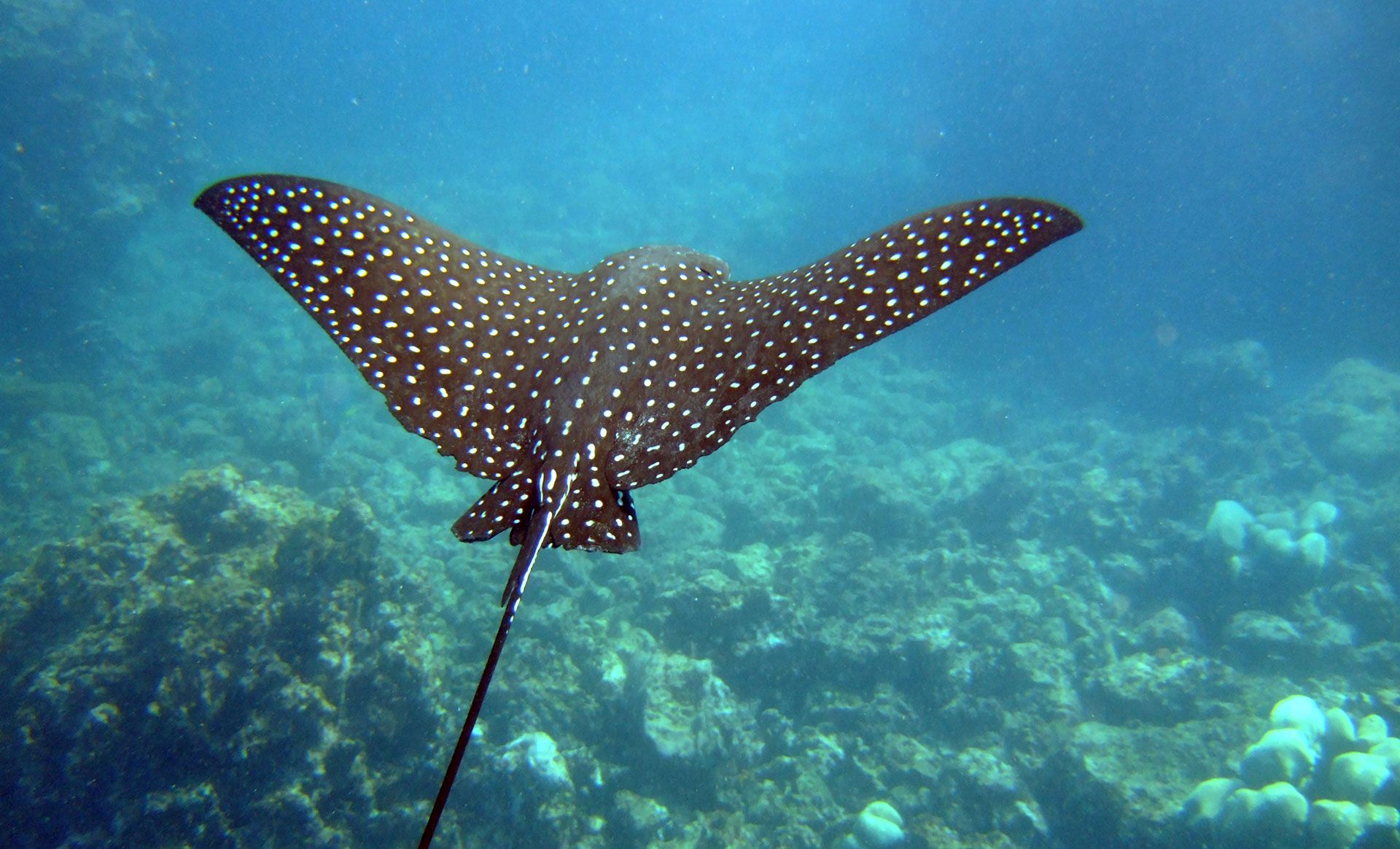
Photo credit: John Norton/Spotted Eagle Ray (Aetobatus narinari) Flying underwater