Galapagos Islands offer fabulous Galapagos wildlife and up-close Galapagos Animal encounters and spectacular scenery. The Galapagos Islands are a World Heritage Site due to the many endangered species living there. All visitors must follow rules and protect the environment on the islands.
Galápagos National Park, established in 1959 and beginning operations in 1968, is Ecuador’s first national park and a UNESCO World Heritage Site.
In Galapagos, only 5 islands have any type of human settlement, which are generally the largest in the archipelago. Since the 1960s, tourism in the Galapagos Islands has exploded, with more than 220,000 annual visitors and this number continues to grow. More hotels are being built and boats being commissioned each year.
The Galapagos National Park regulates immigration and tourism in the entire Galapagos archipelago, very few Ecuadorians are allowed to move there.
What are the Galapagos Islands National Park Rules?
Flash photography is not permitted when taking photos of wildlife. Professional photography and videos recorded for commercial purposes must be authorized by the GNPD. Drones are also another photo-taking element that is not allowed according to the Galapagos National Park Rules!
Visitors to any protected areas within the Galapagos National Park must be accompanied by a naturalist guide authorized by the GNPD.
Stay on the designated trails at all times.
Do not disturb the animals or remove any native plants or rocks.
Do not transport any organic material into the islands, or from island to island. No plants, rocks, animals or their remains, such as bones, pieces of wood, feathers, rocks,
sand, corals, shells, or other natural objects should be collect, moved or disturbed. Cooperate fully with all environmental inspection and quarantine officials during your visit.
Avoid approaching the wildlife and keep a distance from them of at least 6 feet (2 meters).
Do not feed the animals as this can cause health problems.
Do not carry food and/or foreign elements into visitor sites.
Do not approach animals that are resting or their nesting sites.
Smoking and/or campfires are strictly prohibited within the Galapagos National Park, as fires poses a serious risk to the flora and fauna of Galapagos.
Cellular and satellite phone use is prohibited in visitor sites.
Do not take or buy any products or souvenirs made from banned substances, including black coral, shells, lava rock, animal parts, or any native wood or vegetation prior to leaving Galapagos. This is illegal and must be reported.
Conservation is part of everyone’s responsibility. Our ability to show that we care allows us to become Galapagos supporters and ambassadors of conservation.
Dispose of all trash and/or recyclable waste in the designated containers
Travel only with tour operators and/or boats authorized to work in the protected areas of Galapagos.
Remain on marked trails at visitor sites and respect signs at all times for the protection of wildlife, and for your safety.
Camping is only allowed in a few authorized areas in the Islands. Request authorization to camp at the Galapagos National Park’s offices at least 48 hours in advance.
Practice “leave-no-trace” principles in order to maintain the beauty of the environment.
Fishing is only permitted on recreational tour boats authorized by the GNPD.
Motorized aquatic sports, mini-subs, and aerial tourism activities are not permitted in the Galapagos National Park or Marine Reserve.
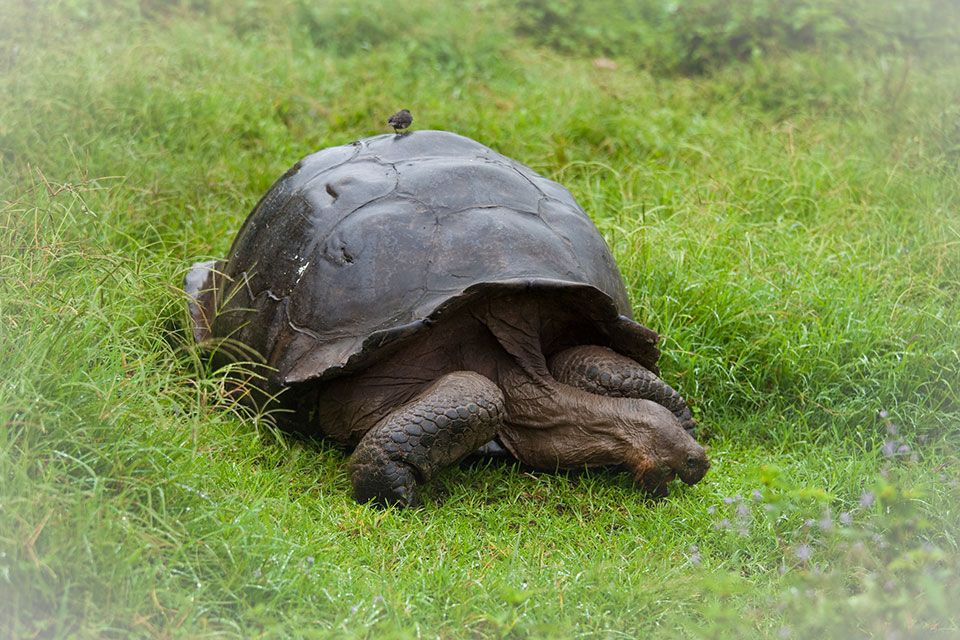
The Galapagos Islands are home to some of the highest levels of endemism species found nowhere else on earth. Some of them includes the giant Galapagos tortoise, marine iguana, flightless cormorant, and the Galapagos penguin — this is the only penguin species to be found in the Northern Hemisphere.
Featured photo credit: Paul Krawczuk / Flickr
Want to learn more about other sustainable destination? Check out section sustainable travel destinations.
British ecotourism company Responsible Travel released a list of its 10 favorite destinations for green eco-travelers; see what made the cut, plus our recommendations of what to do in each eco-friendly locale.
When considering your next big trip consider going to an eco-destination. What makes a destination eco?
Here are a few criteria that have to be met to earn the “eco” stamp:
It’s built using environmentally sound methods and/or operates with alternative energy sources
It minimizes human impact on natural habitats and promotes resource conservation
It sustains the well-being of local people and/or indigenous communities
It helps raise visitors’ environmental and cultural awareness
Here is our list with top 10 eco-travel destinations
Photo: Courtesy Prefeitura Municipal de Turismo, Bonito
1. Bonito
Bonito, in the Brazilian state of Mato Grosso, is one of the top ecotourism destinations suggested by responsibletravel.com ahead of the 11th World Responsible Tourism Awards.
This remote town in western Brazil is sometimes called Caribe do Centro-Oeste, due to its spectacular blue rivers, whose limestone beds act as a natural water filter. The town’s proximity to the Serra da Bodoquena National Park ensures protection of the area’s ecosystems, which are some of the oldest and most diverse on the planet. Resorts such as the gorgeous Santa Esmerelda are catching on to the eco-friendly trend.
Tourists can enjoy a wide range of spectacular beauties in the area, including waterfalls, crystal lakes, caves with stalactite formations and the surroundings of the Serra da Bodoquena national park, much of which is not open to tourism for conservation reasons.
The clarity of the water where travelers can practice snorkeling or scuba diving is due to the large quantity of limestone in the ground, which works as a natural filter leaving impurity on the bottom of lakes and rivers and making these some of the more transparent and clear in the world.
Photo credit: www.tablemountain.net Courtesy Cape Town Tourism
2. Cape Town
South Africa is a leader in responsible tourism and a mecca for Eco Travel. Named by Conservational International as one of the seventeen megadiverse countries in the world. The biodiversity is truly astounding. There are numerous conservation efforts and projects in OUSth Africa designed to protect the native species.
Cape Town is remarkable for its combination of natural beauty and captivating culture. The capital city offers easy access to beaches, forests, and mountains alike. Many restaurants source food locally, and reliable public transportation or the carbon-neutral Green Cabs make it easy to get around. Choose accommodations like the Grootbos Nature Reserve, which takes measures to preserve its land and the animals native to it. Travelers are welcome to go on a Cape Canopy Tour and zip across the Hottentots Holland nature reserve, imitating the majestic eagles in all but the sharpness of eyesight. An exhilarating ride for anyone willing to share the sky with soaring birds to take in the absolute beauty of the Western Cape from a much more thrilling perspective.
Photo credit: Pixabay
3. Birdwatching in Hangzhou, China
Hangzhou, tipped as ‘Paradise on Earth’, is China’s top eco travel destination. It is one of the few places in China where people can watch wild birds chirping in the downtown area. A perfect destination for nature lovers, at Hangzhou’s West Lake, you can glimpse the birds flying over the skyline. Home to dozens of historical sites, the wooded hills encircling the lake are studded with pavilions, towers, pagodas, and caves. The Xixi National Wetland Park in Hagzhou is teeming with biodiversity and a 180 bird species. It allows visitors an intimate glance at the Underwater Ecological Observation Corridor. And for hiking enthusiasts, the Bamboo-lined Path at Yunqi is a serene escape.
Photo credit: Flickr / Rennett Stowe
4. Blue Mountains, Australia
Designated a UNESCO World Heritage site in 2000, Australia’s Greater Blue Mountains Area is a popular ecotourism trip for Sydneysiders seeking to trade in the buzz of the city for the calm of the great outdoors. A mere 90-minute car ride from Sydney, the Blue Mountains (named for the blue hue cast by the eucalyptus oil produced by the region’s native trees) cover some 550 square miles of valleys, swamps, rocky outcroppings, and narrow canyons – topped off by stellar vantage points from which to ogle Australia’s beauty.
A handful of national parks and reserves comprise the area, hosting dozens of trails through breathtaking terrain loaded with unique flora (don’t miss the ancient Wollemi pine, one of the world’s rarest species) and fauna (some 400 species, including koalas, call the Blue Mountains home). Rock climbing, mountain biking, rappelling, canoeing, and horseback riding are just a few of the activities – aside from bushwalking – to enjoy here in the wild. Of course, the prospect of relaxing and breathing in the fresh mountain air at one of the area’s many eco-friendly lodges and cabins can be equally enticing.
Photo credit: Chris McLennan
5. New Zealand
New Zealand is a spot that’s difficult to fully take in during a single trip. Its varied terrain is home to diverse plants and wildlife and makes a beautiful backdrop for hiking, biking, and camping. New Zealand is also one of the most popular destinations for luxury ecotourism, offering comprehensive tours and fancy accommodations with no harm to the environment.
Photo credit: Tea Fields in Kerala. Photo: Midhun Subhash via Wikimedia Commons
6. Slow Travel in Kerala, India
Kerala’s spellbinding rivers and lush fields have deservedly made it one of those eco-travel destinations you must see in your lifetime. In fact, Kerala Tourism has won the award for world’s best responsible tourism project at the World Travel Market London. Kerala’s landscape is as fragrant as it is beautiful. With its hills covered in sweet-smelling spices and gorgeous-looking plantations of tea, every inch of Kerala seems to bear witness to arresting beauty. Travelers can slowly take in and admire Kerala whilst traveling by kettu vallam (tied boats) along glimmering backwaters or take to the road to enjoy delicious cuisine and coffee in the urban areas of the state.
Photo credit: Namibia via Pixabay
7. Wildlife Adventures in Namibia
Namibia’s name is derived from the world’s oldest desert, the Namib. With its golden grass and singing rivers, Namibia easily gathers what the best and most awe-inspiring characteristics of Africa in one stunning place. It can also boast of being one of the best places to watch African wildlife as there is an abundance of elephants, rhinos, lions both in private reserves and freely roaming the African prairies. Namibia offers value for money as camps are priced in Namibian dollars, a currency tied to the South African Rand, rather than the U.S. dollar like many southern African safari destinations, which means your wonderful 5-star trip can be taken at a 2-star price.
Photo credit: Schalz
8. Tobago
This Caribbean island is home to the world’s oldest legally protected rainforest. The Main Ridge Forest Reserve contains a diverse mix of wildlife, including a whopping half of the island’s aviary population (birdwatchers, have your binoculars ready). While many parts of the island (including endangered reefs) have sustained significant damage from hurricanes, the Forest Reserve’s World Heritage Status keeps it well protected.
Photo credit: Jose Letelier Hernandez
9. Extreme Adventures in Bariloche, Argentina
If you are one who loves some extreme sports with their eco-travel, then Bariloche might be the perfect destination for you. Bariloche can boast of an incredibly vast ecosystem- from snowy Andean mountains to thick green forests and glimmering lakes- and this means the fun is almost never-ending! You can have a refreshing time kayaking across crystal blue waters in a guided kayaking tour. If you are partial to a wilder side of adventure traveling then don’t fret – Bariloche’s winds are perfect for paragliding and you´ll never be disappointed with the breathtaking view and stunning mountain ranges seen from far above. Bariloche’s gorgeous landscape will definitely keep you mesmerized wherever you go and if you decide to go trekking for a change then there is no shortage of mountain paths and vistas for you to admire.
Photo credit: Nick Thorne
10. The Lake District National Park
Home to 12 of England’s largest lakes, this sprawling parkland contains a diverse sampling of British flora and fauna. For human visitors, there’s a hiking, boating, and nature exploration, as well as free guided bike and walking tours. In 2006, representatives from various protection agencies joined forces to found the Lake District National Park Partnership, which oversees maintenance and preservation of the park’s 80,000 acres of land. They are currently seeking a bid for World Heritage Status, which would ensure even more protection. The Park also offers many opportunities for volunteer work so that visitors can be sure they’re leaving its forests as beautiful as they found them.
It’s important to figure out a way to eat environmentally friendly. Every small change you make has the potential to make a huge difference. Reducing plastic use by using reusable grocery bags to reducing water use, there are a lot of ways that you can help our environment and eat in a more environmentally friendly and healthy way. Here are some ways in which you can still eat the foods you love but in a greener way.
We put together some tips for you so you can still eat the foods you love but in a greener way. Not many people realize that their daily behaviors can impact a significant change in their environment. Choosing one form of packaging over another or picking seasonal fruit instead of exotic fruits which have traveled thousands of miles, we can effectively help to make the difference to our planet.
There are many ways to eat environmentally friendly and it isn’t difficult at all
Here are 15 tips to help you initiate the change and consume food in a more responsible way.
1. Instead of using plastic bags, at the supermarket, bring your own:
Plastic bags use fossil fuels in their production and often degrade into toxic particles that enter the ecosystem. Every year Americans use over 100 billion plastic bags. These billions of plastic bags end up in the landfill. It can take hundreds of years for plastic utensils, styrofoam containers, and glass bottles to decompose. Eat environmentally friendly by bringing reusable biodegradable grocery bags.
2. Avoid eating endangered: Many fish species, like the bluefin tuna, are on the brink of extinction, and should never be.
3. Choose seasonal fruit and veggies
Seasonal produce allows you not only to support local farming but also to eat well. Seasonal fruit and veggies are tastier and full of nutrients. This will save you on transportation costs and burn less fuel, reducing the carbon footprint.
4. If at all possible, eat foods raw.
Not all foods should be eaten raw, but most of the vegetables can be eaten raw which saves energy on gas from your stone and healthier for you since it preserves all the nutrition. And It is another way to eat environmentally friendly and environment healthy.
Instead of boiling or sautéing your veggies, try to eat them raw as often as possible.
5. Preserve seasonal treats
If you really love cherries or strawberries and would like to eat them all year, it’s not a problem. Learn how to preserve both fruit and vegetables so you can eat locally-grown produce all year long.
6. Purchasing dairy products that are hormone-free.
Make sure that the livestock was not raised with any type of hormones which are artificial and can cause negative impacts.
7. Buy organic
It is not only good for your body but it is good for the environment.
8. Eat less dairy
The production of one pound of cheese might produce more than 11 lbs. of carbon dioxide, which adds to climate change. Eating less dairy products, you’ll be effectively reducing your impact on the environment.
9. Reduce waste
Stop using plastic dishes, plastic utensils or paper napkins. Use real plates, utensils, choose cloth napkins, which can be reused.
10. Repurpose leftovers
Instead of throwing away your leftovers, try to transform them into new meals. You’ll be reducing waste and save on the energy required for cooking a new meal.
11. Eat only meats that do not contain antibiotics.
Many farm animals that are raised for meat are given antibiotics which makes the meat unhealthy. Antibiotics and chemicals are not good for the animals nor the environment either for humans.
12. Support restaurants that purchase their products from locally-owned markets.
These restaurants support local farmers and get the most sustainable sources of produce and other food. Make sure you ask where the food is sourced from.
13. Recycle your food.
You can turn a lot of your waste into resources. You can turn food scraps into compost for your garden. There are a lot of options that are available that you can use to go environment-friendly.
14. Try growing vegetables of your own.
By adding potted plants or a small plot of vegetables, you can have easy access to fresh food which ultimately saves you a trip to the grocery store which saves you gas as well.
Shop responsibly
When doing your grocery shopping, it’s best to choose stores which show interest in sustainable practices and genuinely care for the environment. Being environmentally friendly is proofed to be paid off. Check the store websites to learn more about your food providers and choose those who care about limiting waste, if run a store-wide recycling program or have doors in refrigerated sectors to save energy.