Good camera gear is necessary to capture those travel memories & experiences to share with family and friends. Why buy souvenirs when you can have something better – travel photos!
Traveling on your own is a great and fun way to have completely new experiences without worrying about what other people want.
When you are traveling, it is not easy to take photos of yourself , but in this article we’ll show you some of the camera gear products that can make it easier.
In some situation the old rule to ask someone for help still stays, because you can’t use gear accessories like self-timer or use a tripod in every situation.
Here are some of the top camera gear for you solo travel
The JOBY GripTight GorillaPod Stand has a secure hold for phones with or without a case, for crystal clear images. The rubber foot grips and wrappable legs ensure your phone can be mounted to any surfaces, without a slip of the grip.
Features:
Compatible with point & shoot cameras, action cameras, grip tight phone mount and video light.
Flexible legs wrap around objects
Stainless steel reinforced ball head with 90° tilt
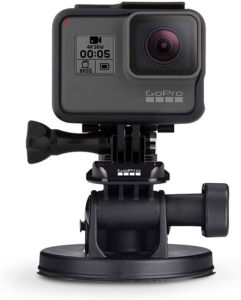
This industrial-strength Suction Cup mount is proven at speeds of 150+ mph and engineered for stability and a broad range of motion. The short extension arm allows for ultra compact mounting.
Features:
Attach your GoPro to cars, boats, motorcycles and more
Industrial strength suction cup proven at speeds of 150+ mph
Engineered to provide a broad range of motion and stability
Quick release base makes moving between shots and locations quick and convenient
Unlike other camera carrying solutions, Capture holds your camera completely rigidly, making it ideal for more intense activities like hiking, biking, skiing, snowboarding and climbing.
Features:
Attaches to any strap or belt up to 3 Inch (7.6 cm) wide and 0.5 Inch (1.3 cm) thick
Works with DSLR, compact and point-and-shoot cameras
Includes PROplate quick-release plate, which fits in most ARCA-type and Manfrotto RC2 tripod heads
The QuickMount holds your phone with a quick click, and lets go with a simple twist. And, the sleek design makes it the lowest-profile quick-mount armband on the market.
Features:
Uses: drive hands-free with your GPS, camera, maps and music
Access: phone mounts with a quick click, and comes off with a simple twist
Adjustable: mounts phone in portrait or landscape positions
Compatibility: works with all LifeProof cases and many other brand cases
Loaded with 26800mAh of power, our go-anywhere portable charger provides a handy charge so you’re never stranded without a connection to the outside world.
Features:
Colossal battery capacity: 26800mAh USB power bank charges most smartphones over 6 times or a tablet 2+ times for an average of 9 days of unrestrained usage per charge
Charges 3 devices simultaneously: 3 ismart 2.0 USB ports provide a powerful total current output of 5.5a. Note: does not support Qualcomm Quick Charge
High-speed recharging: charges in just 14-15 hours with a 2.4a charger or 30-31 hours with a 1a charger
Powered by a 1/2. 3 inch CMOS 12MP sensor with up to four-times zoom, including a two-times optical zoom (24 – 48mm). Up to 31 minutes flight time, 44 mph max speed, 905G takeoff weight, 3-axis gimbal for steady shots, 8GB internal storage, SD card support up to 128GB
The reality of solo travel can be completely different than what most people think. Today more people are traveling solo than ever before due to different reasons.
First, of course, the population is the biggest up to date on earth, but that’s not the only reason why people are going traveling on their own.
More people haven’t met that special someone and is single than before due to our lifestyle at any other time in history. Or you are traveling on business, or you just need some time for yourself. There are many reasons and traveling alone can be entirely different than going with a friend.
One of the biggest challenges for many people of traveling solo is taking the first step and making the decision to go somewhere and pack your bag.
Some people want to travel solo in luxury but for others just to travel can be a luxury. Whether you’re looking for a safari, a luxury tour, or a sustainable travel tour, start by googling “luxury travel,” go to the websites that most match your travel dream destination, and look if there is a section on their site that is devoted to solo travelers.
If you’re planning a solo trip and want to know some tips for luxury solo travel, here are ten top insider tips for independent travelers you need to know.
Top Tips for Luxury Solo Travelers
Choose Your Destination
One of the best things about traveling solo is that you can go exactly where you want to – a popular destination or off-the-beaten-track. Firstly, after you made the decision to travel you have to pick where you want to go. To make your choice easier you have to ask yourself some questions: What would you prefer a city, beach or countryside? What type of weather hot or cold? Adventure or relaxation? Do you wanna go to a popular destination or you want to go off the beaten track?
Then the time you have will help you narrow down your choice. For example, are you planning a long weekend getaway, extended travel, or something like a few days? Depending on the amount of time you have to travel, some destinations will be a better option than others.
Explore Your Options
The best way to have a luxury vacation for cheap is to visit a cheap destination.
All-inclusive hotels and resorts have been gaining in popularity recently. They include food, drinks, and tips, significant savings if you tend to splurge on these and you can enjoy all the facilities in the resorts including free Wi-Fi.
Find Where to Stay
Some hotels and lodges are better than others, especially for solo travelers. It’s great to book through someone who has stayed at that accommodations and can bring more insight for them.
For some travelers, accommodation is often more important than the destination. If you’re going to a spa or a resort, for example, it doesn’t matter where you are because you’ll spend most of your time in that resort.
When looking for a 5-star retreat think about the country first. You want a country where using your currency can buy a lot. A few examples here: Central America, Southern Europe like Greece, Portugal, Spain or Southeast Asia.
You have a better chance of a deal when you call the hotel directly.
Airlines
High Season Means High Prices. Popular destinations tend to have high seasons with corresponding prices. Book early or at the last minute.
Sometimes, finding an amazing flight deal is all you need for a luxury vacation. If you’re flexible, you can try Skyscanner search everywhere feature. This is one of the best sites for finding a good deal with the best flight prices available with searching of over 1,200+ partners. You can a set location in mind and click on the get price alerts button. There are also many other websites where you can subscribe to price drop alerts.
One of the best tips to help you get the most for your transportation dollar is using the rule of thumb – long-haul flights to longer trips and short-haul flights to shorter ones. This will help keep your daily costs down.
Another tip is to look for large immigrant populations near your home airport and you’ll likely discover where flights are less expensive for the distance.
Cuisine
Eating alone is not about eating as quickly as possible but it is more of time to enjoy what you have ordered! According to reservations site OpenTable there is a 110 percent increase in bookings for one person over the past 24 months.
In a fine dining establishment, the bar is a more casual place to eat than at a table and often you can meet people at the bar and have interesting conversations.
There are many ways you can eat in a nice restaurant and not pay the full price. Some of those are buying a discounted gift card or using coupons or birthday discounts. Many countries do not require to leave a tip. When you are traveling alone no matter if it is a business trip or solo travel adventure it is always a good idea to limit your alcohol. Not just because it could add up a big portion of your bill but you do not want to walk out drunk in a foreign country.
if you’re going to pay that premium price, you might as well get your money’s worth by ordering something special that you couldn’t. Or you could enjoy a locally owned restaurant and experience great food which normally you would never discover.
Find an amazing guide
Having a tour guide by your side during your trip can provide you with additional information and a local perspective that allows you to deeper explore the culture. A good guide will be able to explain the local culture and traditions and give you other local insights about the places you visit.
Local guides are available for you to hire to help you experience more of the place you visit and difficulty language situations you ran into you. There are so many more benefits of hiring a guide for your Africa, Asia or any trip.
A good guide will know the time to visit the attractions to avoid big crowds, tricks to let you experience the most out of major tourist destinations or bring you to off-the-beaten-path spots you wouldn’t have known otherwise.
Transportation
You have many options here – you can rent a car /but make sure you have a travel insurance that covers a collision/, use a ride-sharing services like Uber or Lyft if available at that location or you’ll be surprised how many hotels, if you are staying at some, offer free shuttles that stop at major locations in the city. If you are going with a tour most of your transportation of course will be arranged already so you do not have to worry about.
When you don’t know your way around a new place but want to experience the most out of your trip, skip the cheesy tourist tours and seek a local car driver service. Drivers know the streets and popular venues as well as a taxi cab driver, but they also provide a safer and more personalized transportation service.
Use a tour operator
Many solo travelers prefer to join a group travel over independent travel. If this is your preferred choice, then the challenge here is how to choose the tour that’s suits you best.
The beauty of joining a tour is that you’ll have all your logistics taken care of, including some extra travel challenges, transport logistics or language barriers, and this is usually the part that most travelers spend time to.
If you’re want to meet new people and forget about the hassle of organizing your itinerary or transport, then a group tour is your choice. If you just want to go on a journey,
Many tour operators don’t charge the single supplement HF Holidays, Friendship Travel, Explore, or Interpid Travel.
Experiences
Traveling solo can bring you one of the greatest experiences you will ever have in your life. Sometimes you just need to get away from it all and disconnect, and that’s one of the biggest benefits of solo travel. Stepping out of your comfort zone to discover new cultures and unfamiliar places opens up a new way of thinking and living.
Travel planning can be stressful, but when you join a tour, they do the planning for you and even can help you book flights. So you can focus on preparing for your adventure by studying books or researching the destination’s history and culture.
How to travel eco-sustainably
Avoid bottled water Travel with sustainable, eco-friendly or fairtrade travel agencies Reduce consumption of meat Use eco-friendly products Book eco-friendly accommodations Support local economies
Resources for Solo Travelers
One Traveller is a U.K.-based company offering trips for the “mature single traveler” over 50+ to world destinations in Asia, Africa, Europe, and North America.
Solo Traveler is more than just a site – it’s a community where people who share a passion for traveling alone exchange tips, resources, and destination guides for solo travelers.
Singles Travel International is for solo travelers with an average age of 48 through 65 and it offers trips throughout the world.
When traveling abroad is always important to have a reliable credit card. The experts from CreditCards can create a guide to help women budget and save for their travels while informing them about extra safety precautions with the pandemic.
Women Traveling Together is focused on solo female travelers who prefer to join a group of other traveling women. Do you dream of exploring & traveling the world with a small group of women traveling together? Then this may be your top choice. The company offers roommate matching, tours, and other getaways.
Want to find more create destinations for solo travelers? Check our section Solo Travel for more tips and inspirations.
The Ningaloo Coast is a World Heritage Site located in the northwest coastal region of Western Australia. It has long empty beaches, astonishing marine life and world-heritage listing combined with a strong cultural heritage.
The Ningaloo Reef is 260 km long and is one of the largest fringing coral reefs in the world and at some sections comes a close as 10m to shore!
Here are 10 little-known facts about Ningaloo Reef that will bump it up to the top of your wishlist!
Ningaloo Reef is a treasure for those who love scuba diving and snorkeling and exploring shipwrecks and marine life
The study of the Ningaloo Reef area has been a focus of the Department of Maritime Archaeology for a number of years. Over 1400 ships have been wrecked on the coast of Western Australia. Some of the most famous once are Vergulde Draeck, Zuytdorp James Matthews, Elizabeth Belinda, Stefano, and Eglinton early wooden-hulled merchant vessels, the Sepia and Europa iron barques and more.
It is one of the largest biological structures known and visible from space
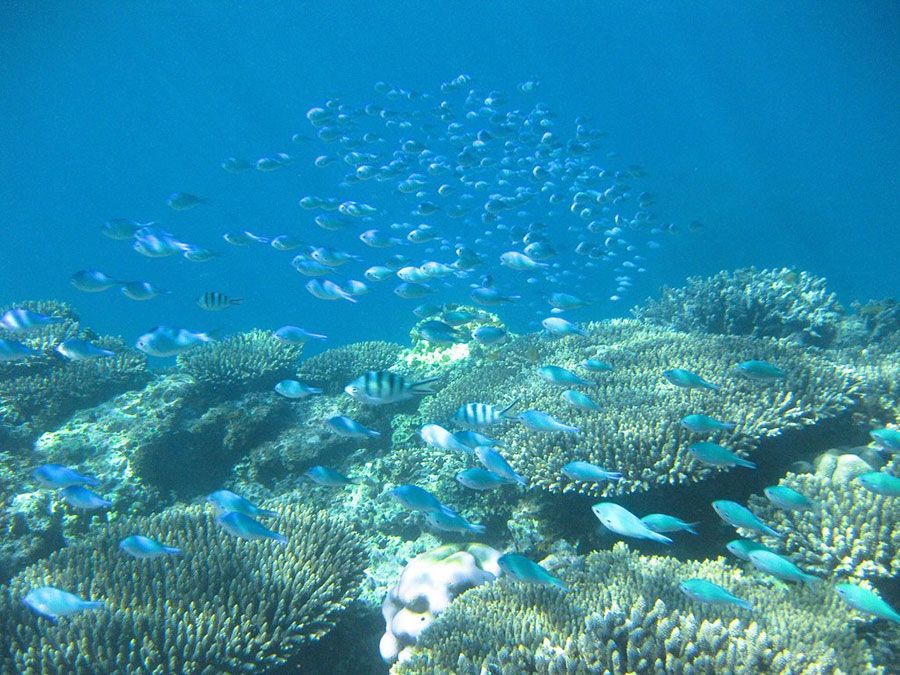
It is one of the most expansive biological structures in the world and home to over 500 species of fish, 220 different coral and algae varieties, 600 species of crustaceans, 655 mollusc species, 75 true cave invertebrates, 69 IUCN listed threatened species, and the world’s largest migrating whale shark population
The area have been inhabited for over 30,000 years.
The Ningaloo Coast and Reef’s name come from Australian Aboriginal Wajarri language
The area have been inhabited for over 30,000 years.
The Ningaloo Coast has an estimated 10,000 Turtle Nests Each Year!
The Ningaloo Coast is recognised as one of the most important nesting places in the world for green and loggerhead turtles. Between November and March female turtles make their journey through the reef to lay their clutches of eggs on shore annually.
Ningaloo Reef is World Heritage List
It’s made the UNESCO World Heritage list for its incredible biodiversity and one of the few places in the world where you can swim with the largest fish in the ocean – whale shark.
The Ningaloo Marine Park protects the 260km Ningaloo Reef and it became the Ningaloo Marine Park in 1987
The Ningaloo Marine Park was established in 1987 and extended in 2004 to cover the entire reef. It’s World Heritage status was negotiated in 2011, with site boundaries extended to include Ningaloo Marine Park, the Muiron Islands, Jurabi Coastal Park, Bundegi Coastal Park, Cape Range National Park, and the Learmonth Air Weapons Range.
The whale sharks and whales of Ningaloo Reef are majestic, wild and rare. Australian waters are home to approximately 170 species of sharks and 120 species of Ray. The world’s largest fish is seen from March to August and can grow up to 15 meters long. They are plankton feeders and are not dangerous to humans.
Ningaloo is recorded to have had around 320 days of sunshine every year with its beautiful weather conditions
The water temperature at Ningaloo Reef is a balmy 22°C – 26 °C all year around
The water temperature of the sea along the coast of the Ningaloo Reef is excellent all year round and varies between 26 ° C in the summer months and 22 ° C during the winter months.
Ningaloo Reef is the world’s largest fringing reef
Ningaloo is home to the world’s largest fringing reef and can be reached by just a short swim in many places.