Volcanoes National Park sits on the north-western province of Rwanda in a small town known as Musanze. This park is the oldest national park in the African continent and it covers 160 km² of rainforest and home to the Rwandan section of the Virungas Mountains, five volcanoes, and shelter endangered Mountain Gorillas.
The Virungas, which tower over Rwanda, Uganda and the DRC presents a variety of climbing and trekking options. Volcanoes national park runs a very smooth gorilla trekking operation. The treks are well organized and structured.
What is Mountain gorilla trekking?
Mountain gorilla trekking is a field exercise that involves traveling into the gorilla habitat, exploring the forest, walking in the footprints and following all leads of fresh Mountain gorilla presence until you reach their exact location. Mountain gorillas live in a group of several individuals with a dominant adult.
Rwanda Gorilla trekking
Tracking endangered mountain gorillas through the mysterious intimacy of the rain forest, home for over 200 species of a variety of colorful birds, reptiles, amphibians, insects among other creatures and chattering of the rare golden monkey is one unforgettable truly unique experiences and make a complete Rwanda safari package. You’ll find thick moors with endemic giant lobelia and groundsel.
The massif Virungas Mountains is home to around half of the world’s precious mountain gorillas. It is one of the three other only habitats for Mountain gorillas on the planet and the only possible destinations for Mountain gorilla trekking expeditions in Rwanda.
Below you’ll find some guidelines for how to behave around gorillas are meant to ensure both your safety and that of the gorillas.
Rwanda Gorilla Trekking Guidelines
Gorillas are susceptible to human infections since their DNA is a 98% match with human DNA and their immunity is not as strong as ours so even a common cold, can be dangerous to the gorilla. Some of these are
Gorilla trekking guidelines in Rwanda include:
Do not go gorilla trekking, if you have a cold, flu, or any other contagious infection.
Only one group of tourists can visit the mountain gorillas each day and you can only spend an hour with them.
Keep a distance of 7m from the gorillas, and if the gorillas try to get close, try to move further away.
Keep your voices low and try not to make sudden movements while around the gorillas.
Do not eat or drink when you are with the gorillas
Hiking, canoeing, mountain biking, and village experiences offer something for everyone to enjoy. The park is the top tourist destination in Rwanda – a small country located in East Africa and surrounded by Uganda, Tanzania, Burundi and the Democratic Republic of Congo. Rwanda’s capital city is Kigali, which is accessible via the Kigali International Airport.
Tourism in Volcanoes National Park is well established. The gorilla tracking experiences and hotels operate smoothly and the people are friendly, appreciating the value of tourism to their economy and their area. There are a number of accommodation near Volcanoes National Park in both Uganda and Rwanda where you can stay for the duration of your gorilla safari.
Those in Ruhengeri and Kinigi generally fall into the lower budget categories while the more expensive can be found closer to the park.
The rainforests are at a higher altitude and temperatures are generally lowest in the African region. The tropical sun cause evaporation of vapor and rain forming. In Volcanoes National Park, it rains at any time regardless of the season.
The park has extensive bamboo forests and some of the last remaining Afro-montane forest habitat on the planet. a spectacular array of rare and endangered animals and plants.
Want to learn more about other sustainable destinations? Check our other Sustainable.
A healthy environment goes hand-in-hand with a healthy lifestyle. There are many ways to go about supporting the environment while eating nutritious foods. Every meal you eat has an environmental impact, from the pollution caused by farming to the carbon footprint of delivering it to your home. There are some simple steps you can take to help the planet and to be sure that your environmentally friendly eating actually helps the environment.
So, here we put together a few tips that will help you start your environmentally friendly way of shopping and eating:
1. Eat Sustainable Seafood
Fishing is one of the most significant drivers of declines in ocean wildlife populations. Overfishing not only damages the marine environment, but billions of people rely on fishing for their income or for protein. Fishing is not inherently bad for the ocean, except when is done in size that can recover – overfishing. Overfishing and climate change are negatively affecting the fish population.
As CTVNews pointed out here, the Bluefin tuna population has fallen 97 percent from its historic levels. In the last few years, many governments have introduced regulations to help fish recover, but it is important the consumers to understand what steps they can take to ensure they are buying seafood that is not raised in any way that hurts the environment.
2. Buy Local
When you buy from stores that feature local products, like the food at farmers markets, you help the environment, because these goods were not shipped to you and no fuel has been used and cause less environmental harm. The ‘Buy local” movement is growing, you have to understand the environmental benefits of buying local. Understanding how is your local produce grown is important to keep in mind. For example, if you buy local produce from a greenhouse gas perspective compare to grown in fields you may not be doing any good to the environment. So if you want to support the local economy, understand how the local produce is grown.
3. Don’t Waste Food
The global volume of food wastage is estimated at 1.6 billion tonnes of “primary product equivalents.” Total food wastage for the edible part of this amounts to 1.3 billion tonnes.
The movement to reduce food waste is gaining traction. France has introduced legislation preventing grocery stores from wasting food, new apps can connect retailers with consumers willing to buy food near expiration, and people are becoming more aware.
Packaging not only protects food quality and safety, but also brings damage to the resources and the environment, and even leads to serious ecological problems. Most of the things we use at home and at work are produced somewhere else so that they have to travel to get to us. Consumers benefit from packages because they protect products as they travel, whether fast food or refrigerators, no matter how far they have to go.
It is important to recognize the potential reduction in pollution that would result from reusing and recycling containers. A new system is needed in which consumption is decreased, and materials are reused and recycled.
5. Reduce Meat Consumption
Eating less meat is better for animals, people and the planet. Sustainably produced meat is slightly more expensive than that from animal factories, reducing the amount of meat you eat will also mean you save money.
You can reduce your overall meat intake by eating some vegan or vegetarian meals and by reducing the amount of meat you eat in each meal.
Costa Rica is a small country in Central America bordered by Nicaragua, Panama, the Pacific Ocean, and the Caribbean Sea. Nearly 30% of Costa Rica is protected as a national park, wildlife refuge, or private reserve.
Costa Rica is inhabited by 5 percent of all of the world’s species. During your eco-vacation, you can see coral reefs, cloud forests, and mangrove estuaries. Costa Rica is one of the world’s frontrunners in sustainable travel, and while you’re here you can book ecologically friendly tours and hotels.
The benefits for the local economy through environmental tourism go to local communities and replaces industries harmful to the landscape as logging and mining. You can either go on your own, or you can join an organized eco-tour.
The eco-tours available in the country, causing a minimal impact on the environment, offered in Costa Rica attract people who have a common interest in nature, culture, and wildlife. These tours provide environmental education, allowing tourists to get involved in conservation projects.
But with so many options for things to see and do, it can be hard to decide which of the many Costa Rica eco tours is right for you.
One of the best ways to explore all of the beauty of Costa Rica is a few nights stay at one of the country’s jungle lodges.
Costa Rican coffee has grown to be much more than an economic boost to the local culture and plays an important role in the history of coffee. Some of the reasons Costa Rica produce quality coffee beans are the combination of ideal conditions such as higher altitudes, fertile soils of volcanic origin combined with cool climates and steady rainfall.
100% of the coffee produced in Costa Rica is arabica beans.
The government gave anyone who wished to grow the beans their own land and plants to get started and the industry quickly surpassed tobacco and cacao as the leading crop.
Whitewater Rafting Down the Pacuare
Rafting on the Pacuare River – rated one of the most exotic and scenic rivers in the world is an amazing experience due to thrilling rapids coursing through rugged canyons and verdant tropical rainforests.
The Pacuare is home to colorful toucans, parrots, sloths, frogs and morpho butterflies. You’ll experience some of the best whitewater that Costa Rica has to offer.
The river has been divided into three sections, the Upper Upper Section, the Upper Section, and the Lower Section. The most commonly rafted section is the Lower Section.
Arenal Volcano is an active andesitic stratovolcano in north-western of the country. Arenal is considered a young volcano and most active of all the volcanoes, and it is estimated to be less than 7,500 years old. It is one of the few historically active Costa Rican volcanoes along with Poás, Irazú, Miravalles, Orosí, Rincón de la Vieja complex, and Turrialba.
Travelers to Arenal will still enjoy its bountiful sights, sounds and activities— there are mountains to be hiked, lakes to be fished and rivers to be floated. If you are visiting this area consider an exciting and scenic trip to the national park surrounding Arenal.
Many visitors do not realize that Arenal National Park is actually home to not one, but two volcanoes.
Manuel Antonio was listed by Forbes among the world’s 12 most beautiful national parks. Located on the Pacific Coast of Costa Rica, Manuel Antonio is easily one of Costa Rica’s most famous tourist attractions. It’s the country’s smallest National Park, complete with exotic toucans, lizards, howler monkeys.
This park has impressive landscapes and several coves with many white-sand beaches and lush foliage amidst great mountains and forests. our beaches are contained within the limits of the park: Manuel Antonio, Espadilla Sur, Teloro, and Playita.
The Central American squirrel monkey, Panamanian white-faced capuchin monkey, black spiny-tailed iguana, green iguana, common basilisk, white-nosed coati and many snake and bat species are also common in the park.
Mario Boza lead the effort to preserve the region and to have the government declare the volcano a protected area.
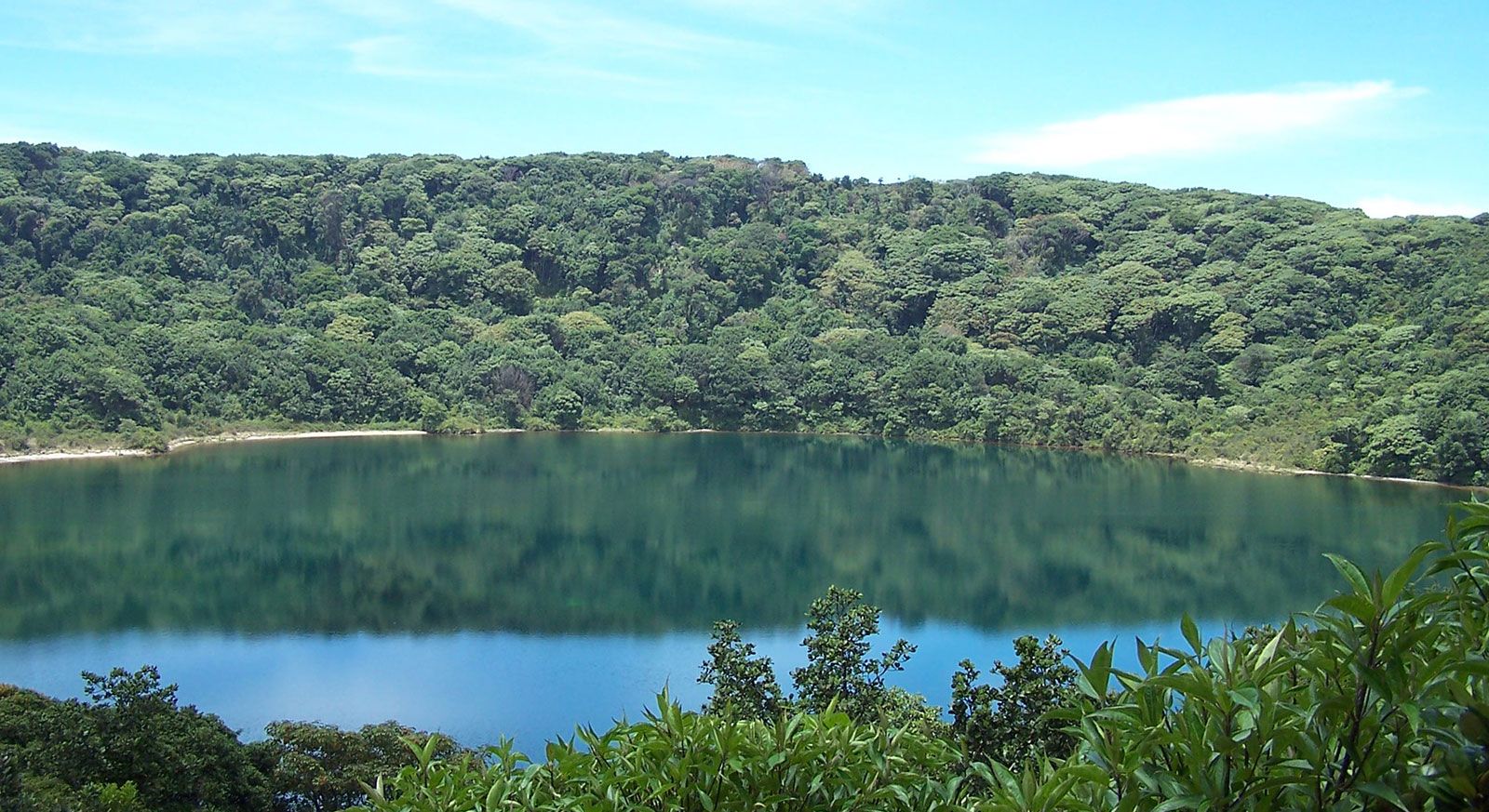
Active volcanoes are the most exciting features of Costa Rica’s geological composition. The Poás Volcano is an active 2,708-metre stratovolcano in central Costa Rica and is located within Poas Volcano National Park. It has two unique crater lakes – lake Botos to the south is an inactive crater with cold clear lake water and the north is Laguna Caliente, a mile wide volcanic crater filled with water so acidic that no plant or aquatic life can survive.
Tamarindo Estuary Kayaking Tour, Guanacaste
This tour gives you the unique opportunity to enjoy the spectacular views of the beautiful mangrove in Tamarindo and observe the wildlife. You can observe abundant wildlife of the tropical dry forest while learning about the unique ecosystem of the mangrove forest. You will see brown pelicans, brown booby, magnificent frigate birds, and neotropical cormorants.
During your tour, you can stop and have a deeper explanation of the local flora and fauna, specifically the famous local Guanacaste trees, Costa Rica’s National tree.
Tortuguero is a village on the Northern Caribbean coast of Costa Rica in the Limón Province. Tortuguero National Park can surprise you with its network of canals, rivers, lagoons, beaches, and dense rainforest here are interlinked. You can explore these canals and observe the wildlife by boat, kayak or canoe and it makes it a great and relaxing way to experience nature.
Its beaches are famous nesting grounds for sea turtles, including endangered green turtles. The surrounding rainforest is also rich with wildlife with many bird species. During September and October many local “guides” will offer tourists the opportunity to watch turtle nests hatch.
The National Park is also host to an incredible biodiversity of insects, resident and migratory birds, and mammals, including jaguar and four species of monkey.
Some of the tours also includes a stop at the world-famous Wildlife Rescue Center, a not-for-profit organization that rescues wild birds and exotic animals, helps them rehabilitate and then releases them back into the wild.
The passion of the owners, the dedication of their staff and the generosity of volunteers and donors makes everything possible.
It was established in 1978 as a biological reserve, but due to the growing popularity after 1990 its status was changed to a national park. Carara is one of Costa Rica’s most popular National Parks, mostly because it is located close to San José.
You can watch for the 150-200 scarlet macaws that nest and feed throughout the reserve. There are two hiking trails in Carara. Bordering the Pan-American Highway, this park is unique as the Amazonian and Mesoamerican ecosystems.
This national park has 10 of the most uncommon and rare hardwoods in the country.
Also, it can be found in the park many pre-Columbian archaeological sites dating back 2,000 years.
Leatherback Turtles National Park was established in 1991 to protect Leatherback turtles species from extinction. The park is part of Caravan’s Costa Rica eco tours.
Leatherback turtles can grow as long as six feet and weigh up to 1100 pounds or more. Along with the Olive Ridley and Hawksbill turtles, Leatherback turtles use this area of Costa Rica as their annual nesting grounds and each year thousands of turtles return here to nest.
Although sea turtles live most of their lives in the ocean, adult females must return to land in order to lay their eggs. Scientists believe that nesting female turtles return to the same beach on which they were born.
The flora in the area includes mangrove trees that are greatly common and for instance monkeys and crocodiles can be observed in the park area. The park is the ideal place for hiking and after that sunbathing and relaxing at the lovely Playa Grande.
During your visit to the park you are not allowed to use flash cameras or flashlights, and to approach a turtle.
Featured image photo credit: Coral Blanche Hummer / Flickr