• About
  • Affiliate Disclosure
  • Privacy Policy
  • Terms of Use
  • Contact Me
NEVER MISS A TRAVEL DEAL
Main LogoLight Logo
  • Home
  • Destinations
    • Africa
    • Asia
    • Australia
    • Europe
    • Balkans
    • Caribbean
    • North America
    • Oceana
    • Central America
    • South America
  • For You
    • Resources
    • Questions
    • Travel Tips
    • Solo Travel
    • Travel Inspiration
    • Photography Guide
    • Motivation
  • Substainable Travel
  • Travel Guides
  • Get Involved
  • Travel Gear
    • Photography Gear
    • Travel Gear
    • Women’s Packing List
    • Men’s Packing List

5 Things to Know About the Sunscreen and How to Protect the Coral Reef

September 14, 2019
1
0
Share

Some of the pollutants slowly trickling into the oceans are the chemicals in many sunscreens. As swimmers jump into the sea, their sunscreen washes away and filters into the water. Scientists who have become aware of the dangerous effect these chemicals have on coral reefs have developed the best reef-safe sunscreen brands to protect you and the ever-important marine life that inhabits our oceans. Knowing coral reef safe sunscreen information will help keep the sea beautiful and alive.

“Eighty-five percent of the Caribbean coral reefs died before 1999 or 2000. That wasn’t global warming. It’s pollution,” says Dr. Craig A. Downs, Ph.D., executive director of Haereticus Environmental Laboratory.

Making an eco-savvy choice, therefore, and using reef-safe sunscreen matter. And not only for the corals.

Dr. Downs and his group began taking a gander at particular synthetic concoctions and found that oxybenzone and octinoxate are the principle guilty parties. The reason they are so generally utilized in sunscreen is that they assimilate the unsafe UV beams. For humans, oxybenzone and octinoxate are chemical sunscreen ingredients that keep harmful UV rays from penetrating the skin, killing cells, and causing a burn. However, they have the opposite effect on coral reefs. These reefs, which are generally bright colors, end up bleaching to bone white under the harsh rays of the sun when they come into contact with these chemicals.

Oxybenzone, for example, is toxic in four different ways: it causes damage to the DNA that may lead to cancer and developmental abnormalities, it is an endocrine disruptor, it causes deformations in juvenile corals, and, lastly, it leads to bleaching.

Dr. Downs points out that certain preservatives found in sunscreens are also toxic: parabens such as the commonly used methyl paraben and butyl paraben, or phenoxyethanol

Another safe alternative to oxybenzone and octinoxate is non-nano titanium dioxide. Before purchasing your next bottle of sunscreen, also check the list of for any of the toxic preservatives we mentioned.
Hawaii is planning on banning certain sunscreens in 2021 that contain harmful compounds.
In addition to oxybenzone and octinoxate, read the label on your sunscreen to see if it contains any of these other destructive chemicals: homosalate, octisalate, octocrylene, avobenzone, dimethicone, parabens, BHT, nanoparticles, propylene glycol, and retinyl palmitate.

Here are five reasons why your choice of sunscreen matters.

Table of Contents
  1. 1. Chemical Sunscreen Can Awaken Coral Viruses
  2. 2. Chemical Sunscreen Ingredients Can Bleach or Kill Corals
  3. 3. Chemical Sunscreen Can Harm More Than Corals
  4. 4. Sunscreen Pollution Threatens Local Economies
  5. 5. Chemical Sunscreens Affect Humans Too

1. Chemical Sunscreen Can Awaken Coral Viruses

Sunscreens washed off into the ocean each year change the chemical composition of the water and make it a thriving place for viruses and bacteria. Some of these viruses attack corals, causing them to expel their life-giving algae, a situation that causes coral bleaching and the viruses spread to the surrounding coral communities.

2. Chemical Sunscreen Ingredients Can Bleach or Kill Corals

Besides viruses, research has also shown that some ingredients in chemical sunscreens can cause coral bleaching and potentially kill these organisms.

While most countries implementing sunscreen bans fight against oxybenzone and octinoxate alone, scientists have identified that butylparaben and 4-methylbenzylidene camphor can also have a similar action.

Using a sunscreen free of these ingredients is essential if we want to preserve the integrity of the marine ecosystem.

3. Chemical Sunscreen Can Harm More Than Corals

The compounds that cause coral bleaching can also affect other forms of marine life. Fish are also affected by oxybenzone and octinoxate.

Here is one example from Dr. Downs, who was on a working visit at the Bahamas, he was conversing with an administration worker at supper who shared how much he loved the coconut kind of the neighborhood angle they were eating on.

“We solicited the gourmet expert what kind from flavoring he put in it, and he stated, ‘simply salt.’ The coconut was some recombinant aroma of sunscreen. That is a substance aroma. It’s a terrible, dependable scent that will amass in life forms thus we were tasting it in the fish,” Dr. Downs explained.

So what can you do next time you hit the beach to prevent further damage? First of all, forget about aerosols.

These substances act as hormone disruptors and induce feminization in male fish. This leads to the interruption of their sexual activity, affecting the reproduction of many species

4. Sunscreen Pollution Threatens Local Economies

The death of coral reefs leaves many species of fish and crustaceans without a habitat; a situation that leads to the death of this marine wildlife. Combined with the affected fish reproduction, chemical sunscreens contribute to the extinction of many fish species.

This has two important consequences: famous diving spots become sterile and unattractive and less fishing possibilities for local businesses who base their subsistence on fishing.

5. Chemical Sunscreens Affect Humans Too

Chemicals in sunscreen are not only bad for the environment. They are bad for humans too. Besides rashes and allergic reactions, researchers also investigate the carcinogenic effects of both oxybenzone and octinoxate.
Other chemicals typically used in these products also act as hormone disruptors and can affect both fetuses if used by pregnant women as well as infants and toddlers.

Considering the negative impact chemical sunscreens have on both us and the environment, changing our habits and using an eco-friendly approach matters.

Coral Reef safe Sunscreen
Photo credit: XL Catlin Seaview Survey/AP

Natural mineral sunscreens are undoubtedly a better choice; furthermore, you can use other eco-friendly ways to protect yourself from the sun while also safeguarding the global economy and our ecosystem.

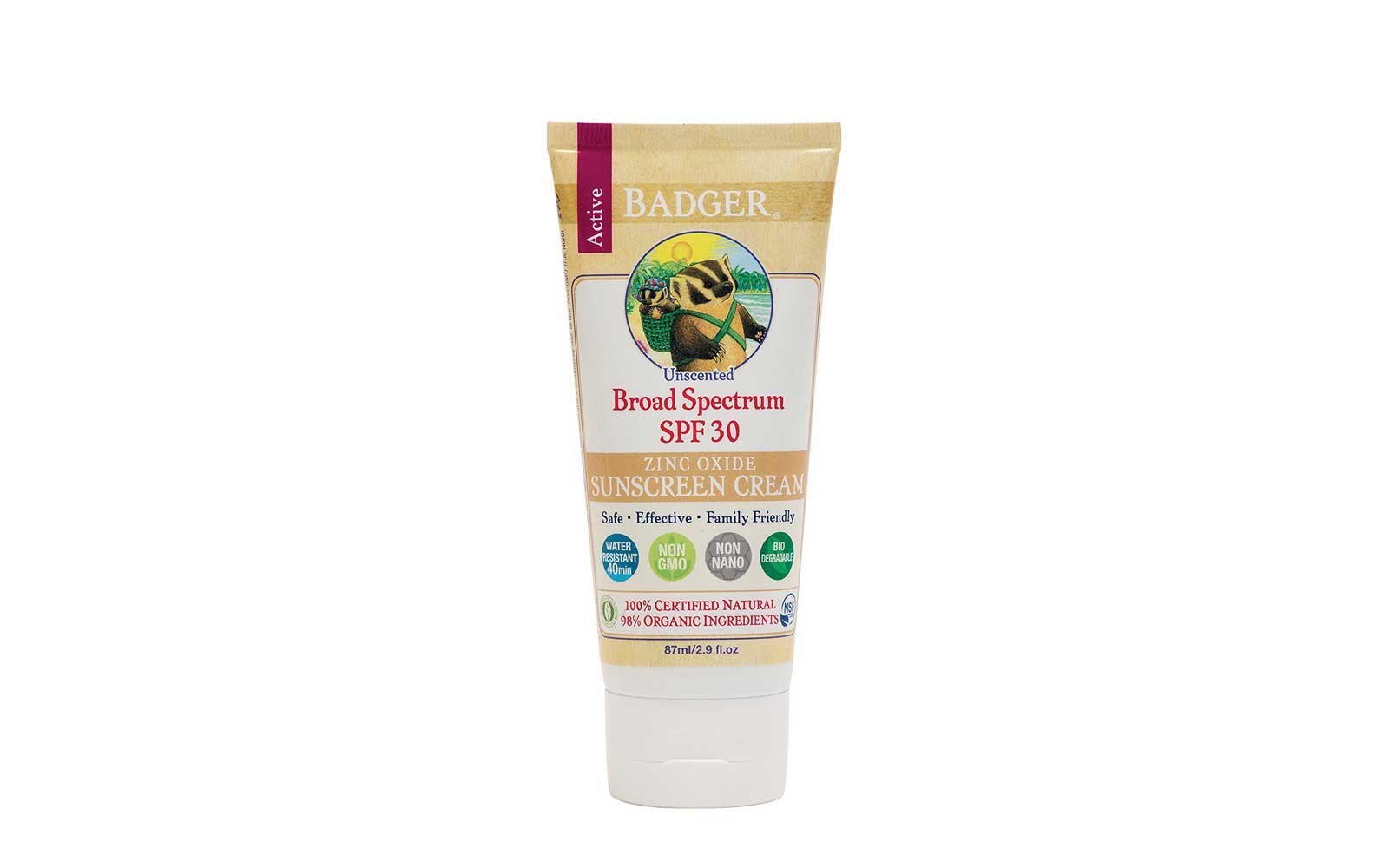
Another option to help preserve the environment is to purchase sunscreen safe for coral reefs. Badger Balm is a family-run business that is committed to creating effective sunblock powered by nature to protect the world. One of the best reef safe sunscreen brands, their rigorous standards for their products makes it safe for children, adults, and the ocean, slowing the killing of coral reefs. In addition to other natural body products, they offer kids, sports, active and daily sunscreen safe for coral reefs so that no matter when you put it on, it’ll protect your skin and the environment.

Raw Elements was founded by an ocean lifeguard who daily watched beachgoers slather on chemicals that would wash off in the ocean, killing coral reefs. This set him on a journey to create sunscreen safe for coral reefs. To further protect more of the environment, they offer some sunscreens in plastic-free packaging to reduce the amount of waste that pollutes the land and sea. Their natural sunblocks are designed with safety and nature in mind at every step of production.

Raw Love sunscreen is made using coral reef safe sunscreen information for people who love jumping into the ocean to swim, dive, or surf. With all-natural ingredients, their sunscreen will protect your skin from the damaging effects of sun exposure, in addition to protecting the ocean. While they don’t offer the range of sunblock options as other best reef safe sunscreen brands, their product is both effective and safe for humans and marine life.

Having coral reef safe sunscreen information can help you make informed decisions when it comes to purchasing sunblock for your beach vacation.

Remember to double check the sunscreen ingredients and the label – each of our decisions matter to save the coral reefs!

Photo credit: Tom Fisk from Pexels

For a complete list with reef-safe brands check out our post about 10 Brands Sunscreen to Try that Are Not Killing Coral Reefs

Total
0
Shares
Share 0
Tweet 0
Pin it 0
Share 0
Coral Reefeco-travelEnvironmentally FriendlySunscreensustainable tourismSustainable Travel
Related Posts
Uruguay

15 Must Visit Attractions in Uruguay

November 22, 2019
0
0

Uruguay is a South American country known for its verdant interior and beach-lined coast. The capital, Montevideo, revolves around Plaza Independencia, once home to a Spanish citadel. The name Uruguay means a river of colorful birds. It is a word in Guarani that was spoken by the natives of the area.

15 Must-Visit Attractions in Uruguay

Uruguay is one of the most eco-friendly countries in South America and it is pretty liberal as marijuana and gay marriage are legal, and it is also.

Montevideo
Photo credit: Marcelo Campi Wikipedia

1. Montevideo

Montevideo is the capital and largest city of Uruguay. It is a city with a long history and a rich culture, founded in 1724.
With WiFi available in public places and e-scooters filling the city, Montevideo is leading Latin America’s digital revolution.

The exchange of culture and traditions has always nourished Montevideo’s literary movements. The capital is home town of many renowned writers, including Mario Benedetti and Juan Carlos Onetti.
The oldest part of Montevideo, La Ciudad Viejais is mostly cobblestoned with many historical buildings showing the colonial history of Montevideo city such as the cathedral, main plaza and several museums.

San Gregorio de Polanco
Photo credit: Marcelo Campi / Flickr

2. San Gregorio de Polanco

San Gregorio de Polanco is a small city in the Tacuarembó Department of northern-central Uruguay. It is one of the best tourist attractions in Uruguay because of its pure healthy air, abundant flora, and blue aqua.

This small town has only 3,000 residents, but there are plenty of things to do including a visit to the native visual arts museum, the excellently adorned OSE water tank, and the regional parish with the art gallery inside.

Salto
Photo credit: Deni Williams / Flickr

3. Salto

Salto is an affordable and it offers enough attractions make life interesting. It is the second largest city in Uruguay with a population over 110,000.
Some of the attractions include the Salto Grande hydroelectric Dam shared by Argentina and Uruguay and the AcuaMania Waterpark.

The city owes its name to the Spanish word used to refer to the many falls of water created by the Uruguay River in that area.

Nueva Helvecia
Photo credit: Diego Ocampo Herrera / Wikipedia

4. Nueva Helvecia

Nueva Helvecia is 120 kilometres west of Montevideo, the capital and largest city of Uruguay and just a few miles from the coast of the Atlantic Ocean. Nueva Helvecia was the first tourist area in the country. The city has plenty to offer to visitors with its history, culture, local cuisine and natural surroundings full of beauty.

The region is famous for its dairy production. Travelers can visit an artisan cheese factory and learn about the production of different cheeses.

Some of the tourist attractions include the Plaza de los Fundadores, the city gate, Regional Archive Museum, the José Pedro Varela Municipal Park, the OSE tank, with its unusual architecture and the Schöenstatt Shrine.

Piriápolis
Photo credit: Ariel García / Flickr

5. Piriápolis

Piriápolis is located in the Department of Maldonado, only one hour away by car from the City of Montevideo. This historic town is about 40 km west of Punta del Este. Piriápolis was the first beach resort in Uruguay and one of the most popular.

The weather from November to April is pleasantly warm and dry, perfect for plenty of beach time. June to September is cooler and wetter. The active season is between December and March.
There is also a natural reserve of native and rare South America fauna.

Rocha
Photo credit: Cristian Menghi / Flickr

6. Rocha

Rocha has some of the very best beaches in Uruguay and visitors can enjoy them almost ten months of the year. This is a place with wild isolated beaches and surprising nature is yet to be fully discovered.

Punta del Diablo
Photo credit: Pablo Martín Fernández / Flickr

7. Punta del Diablo

In recent years many visitors have discovered the great personality of this fishing village on a rocky point where the sea has sculpted to create almost perfect round shapes and strange stone seas.

The beaches are spectacular; Brava is the southwest, with waves that cut special blue-green. It is ideal for children Mansa Beach, a quiet and huge wind sheltered bay.

Tacuarembó
Photo credit: Tano4595 / Wikipedia

8. Tacuarembó

Tacuarembó town is fairly small and easily walkable. However, a good number of attractions lie out of town and you’ll need your own transport to reach them. It is located in the heart of the country about 200miles away from the capital.

Fiesta de la Patria Gaucha is a big event during the second weekend of March. It celebrates countryside life and customs. Accommodation is a big issue at the festival.
Some 150 sculptures and murals outdoors exhibits can be enjoyed in public and private spaces in various parts of the Tacuarembó department.

Durazno
Photo credit: Vince Alongi / Flickr

9. Durazno

The economy of Durazno largely depends on agriculture and agrotourism. The raising of sheep, and of cattle.
The Yí and Negro Rivers and large streams and in the lakes Rincón del Bonete and Baygorria.
Attractions in Durazno include important events such as the Folklore Festival and the ‘Meeting of the Gauchos’, places like the Hispanidad Park, located a few kilometers from the city, the church of San Pedro Parish, Regional Art Museum, Casa del General Museum.

Carmelo
Photo credit: Mai / Flickr

10. Carmelo

Carmelo is famous with its winemaking. Winemaking was brought to the region over a hundred years ago by European immigrants. It is one of Uruguay’s largest wine-producing area.

The very alkaline soil with fossils creates a perfect microclimate for vines.

Points of interest in this area are Punta Gorda, Zagarzazú and Colonia Estrella. Close to Colonia Estrella is the Zagarzazú beach.
Nearby places are the picturesque Colonia, historic Fray Bentos, and the spa towns of Paysandú and Salto.

Carmelo is an ideal destination for those looking for a place to relax and for wine lovers tourism due to the large variety of vineyards and wineries.

Cabo Polonio
Photo credit: Marcelo Campi / Flickr

11. Cabo Polonio

Cabo Polonio is a rocky point that stands 15 meters above the ocean, with two inhabited islands across one of the largest reserves of sea lions in the world.
There is no water or electricity in Cabo Polonio. This place is attracting many bohemians and backpackers.
You can just lay on the beach and forget about all the luxuriate.

Punta del Este
Photo credit: alobos life / Flickr

12. Punta del Este

Punta del Este is a city and resort on the Atlantic Coast in the Maldonado Department of southeastern Uruguay.

Some popular attractions in the area include the La Mano giant sculpture, the Santorini-styled complex Casapueblo, the Enjoy Punta del Este hotel and casino complex, La Barra neighborhood, the iconic Puente Garzón, Gorriti Island, Arboretum Lussich, and the Museum of the Sea. Here is also the Ralli Museum, featuring exquisite pieces of modern and contemporary Latin American art.

Paysandú
Photo credit: Tano4595 / Wikipedia

13. Paysandú

Paysandú is one of Uruguay’s most important cities. It is located in the northern part of Uruguay. Due to the historical events in this area, Paysandú is important tourist attraction. Just a few miles away you’l find the Guaviyú and Almirón hot spring resorts.

Some of the attractions of this beautiful historical city include the Historical Museum or the Perpetuity Monument where you can learn a part of the rich and booming history of the city.

Paysandú has many events, including Beer Week – one of the most important events celebrated in Uruguay, which attract many tourists from all over the world.

Chuy Uruguay
Photo credit: John Seb Barber / Flickr

14. Chuy

It is the last coastal resort of Uruguay and it is bordering with Brazil to the southeast. What is interesting is that the main street in Chuy is the actual border between Uruguay and Brazil.
The border is open, so you’re free to cross back and forth between the Brazilian city Chuí and Chuy.
Chuy’s residents are mostly Uruguayans and Brazilians, with almost all its residents speaking Spanish and Portuguese.

It has long beaches which makes it ideal for long walks on the beach. Some points of interest are the Santa Teresa Park, the San Miguel Fort.

“Chui” was also the name the Indians gave a yellow-breasted bird.

Colonia
Photo credit: Philip Choi / Flickr

15. Colonia del Sacramento

Colonia del Sacramento is a city in southwestern Uruguay, across the Río de La Plata from Buenos Aires. It’s known for its cobblestoned Barrio Histórico, lined with buildings from its time as a Portuguese settlement.

It has a long history and it was founded by the Portuguese in 1680 on the Río de la Plata, the city was of strategic importance in resisting the Spanish.
The historic Colonia del Sacramento is declared a World Heritage Site by UNESCO in 1995 and attracts thousands of visitors during the year from around the world. Travelers can enjoy a unique landscape with spectacular views of Río de la Plata.

Main photo credit: Wagner T. Cassimiro “Aranha” Wikipedia

Want to learn more about Bhutan? Check our other posts about Bhutan.

Sustainability in Singapore

Sustainable Travel in Singapore

February 19, 2019
0
0

Singapore, an island city-state off southern Malaysia, is a global financial center with a tropical climate and multicultural population. It is among the most favored tourist places in the world. The tourism industry in Singapore is a major contributor to the economy of the country. The total number of tourists in Singapore per year continues to grow and in 2010 was more than 11 million, which is more than the population of the country.

According to a report, the average stay per visitor in Singapore is 3.86 days.
Singapore in Sanskrit means “Lion City”. According to the monks, the city gets its power from the lions that once supposedly roamed here.

Singapore, declared its independence in 1965, an island with over 5 million inhabitants and only 700 square km, has one the prize Asia’s greenest city in 2016.
In this post, you’ll learn more about Singapore’s unique approach to environmental sustainability.

Sustainable Living in Singapore

The Marina Barrage, the world’s largest urban hydro dam reservoir, is transforming Singapore’s downtown city core.

Sustainable Living Singapore
With well water resource and waste management, the Singapore government has focused also on stimulating land developers to incorporate green technology into the design and construction of all new buildings or renovate older buildings to the new standards. The government puts efforts to make green buildings mandatory in the near future.

The tourism industry involves the hospitality sector in it and hospitality has a great impact on the environment and natural resources of the country. Hotels, food, and beverage companies should take great care of the natural environment around them.

The country attracts the world’s top eco architects and uses the latest and innovative technologies in developing eco-construction large-scale projects for green zones and sustainable architecture. A great example of this are the skyscrapers built as sustainable ecosystems – Fusionopolis, Solaris Tower or the EDITT Tower integrate vegetation for cooling, generate solar power and transform wastewater into biogas.

Leveraging tourism to promote sustainable development will require a tough balancing act between development and sustainability.

sustainable ecosystems
The government of Singapore has provided funds for tourism development in the country and its goal is to triple the incomes from tourism. Such an example is the state-funded project, where a vast eco-tourism zone is creating in a bid to bring in more visitors with a jungle for a bird park, a rainforest park and a 400-room resort to create a green tourism hub.
The new bird park – which will replace an existing one elsewhere in Singapore – will feature nine aviaries, while the rainforest park will have walkways among treetop canopies.

Singapore has already established itself as a global leader in sustainability, with hosting international events such as the World Cities Summit, Singapore International Water Week, Singapore International Energy Week and Green UrbanScape Asia to gather together world leaders and share best practices water issues and urban environment.

Companies have focused on creating immersive and meaningful experiences for travelers and sustainable tourism, or eco-tourism is quickly becoming a big part of it.

“Travellers these days are more affluent and largely looking for never before experiences. They are well educated and conscious about not leaving carbon foot-prints behind as they travel. Sustainable tourism is, hence, getting more popular as it comes with this feel-good factor of giving back.” – said Alicia Seah, Dynasty Travel’s director of marketing and communications.

eco-friendly hotel business
Singapore’s eco-friendly hotel business is booming and some examples for that are the tri-tower Marina Bay Sands Hotel or the organic terraced ParkRoyal.

One major characteristic for the country is the little to no corruption, and this combined with a liberal government, the higher percentage millionaires and a hugely successful economy, is a model of urban environmental sustainability. The country scored near-perfect Yale EPI ratings in health impacts, air quality, water resources, sanitation, agriculture and climate, and energy.

“By being clean and green, our aim has been to show that our country is well-run,” says Mr. Khoo Teng Chye, executive director at the Centre for Liveable Cities (CLC)

Other popular eco-tourism destinations include the Maldives, Australia, Thailand, Bali, as well as Guilin and Lijiang in China

Want to learn more about Greenland? Check our other sustainable travel posts.

1 Comment
    How Plastic Pollution Affects Marine Life? – Earth Needs Your Help says: Log in to Reply
    May 22nd 2021, 4:18 pm

    […] Disruption to the cycle of coral reefs. […]

Leave a Reply Cancel reply

You must be logged in to post a comment.

Sunscreen Is Killing Coral Reefs 10 Brands Sunscreen to Try that Are Not Killing Coral Reefsby padmin / September 13, 2019
7 Best Filtered Water Bottles for Travelby padmin / September 15, 2019Water Purifiers for Travel

“Travel in a respectful way. Don’t harm cultures or lands but seek ways to improve them. Stay in lodges and hotels that are ecologically sound, that use solar, recycle and employ locals. Purchase goods and services that benefit the local economy.”

Latest Travel Tips

Subscribe to Our Newsletter & Get Latest Updates.

Affiliate Disclosure: As an Amazon Associate, we may earn commissions from qualifying purchases from Amazon.com. You can learn more about our affiliate policies here.

© 2025 The Sustainable Travel. All rights reserved.
Created by  PND Design | SEO by: SEOCrunches

  • About
  • Affiliate Disclosure
  • Privacy Policy
  • Terms of Use
  • Contact Me